Reimagining Public Healthcare With
A Centralized HMIS



Best Post-graduation Project Award

WINNER
Keywords
Digital Transformation
Software as a Service
Inclusive Care
Healthcare Eco-system
See Detailed Report
Reimagining Public Healthcare With
A Centralized HMIS
Best Post-graduation Project Award
WINNER
Keywords
Digital Transformation
Software as a Service
Inclusive Care
Healthcare Eco-system
See Detailed Report
Reimagining Public Healthcare With
A Centralized HMIS
Best
Post-graduation Project Award
WINNER
Keywords
Digital Transformation
Software as a Service
Inclusive Care
Healthcare Eco-system
See Detailed Report
Reimagining Public Healthcare With
A Centralized HMIS
Best
Post-graduation Project Award
WINNER
Keywords
Digital Transformation
Software as a Service
Inclusive Care
Healthcare Eco-system
See Detailed Report
Project Overview
Project Overview
Project Overview
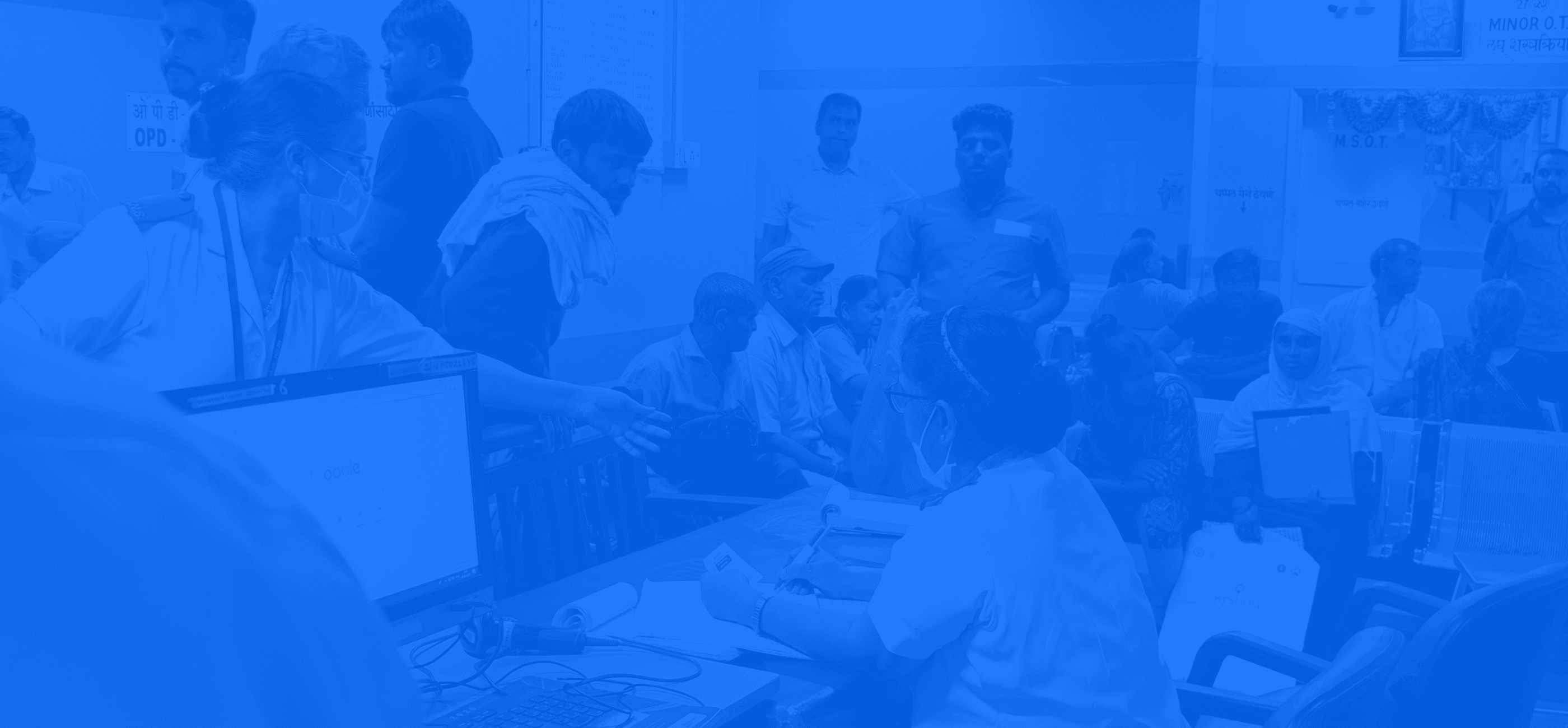
In the chaos of overcrowded hospitals, fragmented systems, and paper-heavy workflows, a Centralized Hospital Management Information System (HMIS) emerges as a digital backbone for public healthcare. It is not just a management system, it's a smart ecosystem that transforms how hospitals operate, communicate, and care.
This project aims to enhance hospital workflows and patient care by implementing a comprehensive HMIS across healthcare facilities, including major hospitals, ward-level centers, and peripheral clinics.
In the chaos of overcrowded hospitals, fragmented systems, and paper-heavy workflows, a Centralized Hospital Management Information System (HMIS) emerges as a digital backbone for public healthcare. It is not just a management system, it's a smart ecosystem that transforms how hospitals operate, communicate, and care.
This project aims to enhance hospital workflows and patient care by implementing a comprehensive HMIS across healthcare facilities, including major hospitals, ward-level centers, and peripheral clinics.
My Role
My Role
UX Designer
UX Designer
Duration
Duration
4 Months (Continued)
4 Months (Continued)
Tools Used
Tools Used
Responsibilities
Responsibilities
User Research
Stakeholder Interviews
System Mapping
Information Architecture
Design System Development
User Research
Stakeholder Interviews
System Mapping
Information Architecture
Design System Development
Scalable Product Design
Interaction & Visual Design
Accessibility & HCI Integration
Usability Testing & Validation
Cross-functional Collaboration
Scalable Product Design
Interaction & Visual Design
Accessibility & HCI Integration
Usability Testing & Validation
Cross-functional Collaboration
Problem Space
India’s vast public healthcare system, serving over a billion citizens, operates through fragmented, paper-based processes and siloed departments. These disconnected workflows lead to inefficiencies in data sharing, coordination, and decision-making. Patients are often required to carry physical files between service points, resulting in delays, errors, and inconsistent care. The lack of real-time data visibility further hampers administrative oversight, resource optimization, and overall healthcare efficiency.
India’s vast public healthcare system, serving over a billion citizens, operates through fragmented, paper-based processes and siloed departments. These disconnected workflows lead to inefficiencies in data sharing, coordination, and decision-making. Patients are often required to carry physical files between service points, resulting in delays, errors, and inconsistent care. The lack of real-time data visibility further hampers administrative oversight, resource optimization, and overall healthcare efficiency.
Crafted Solution
Crafted Solution
Crafted Solution

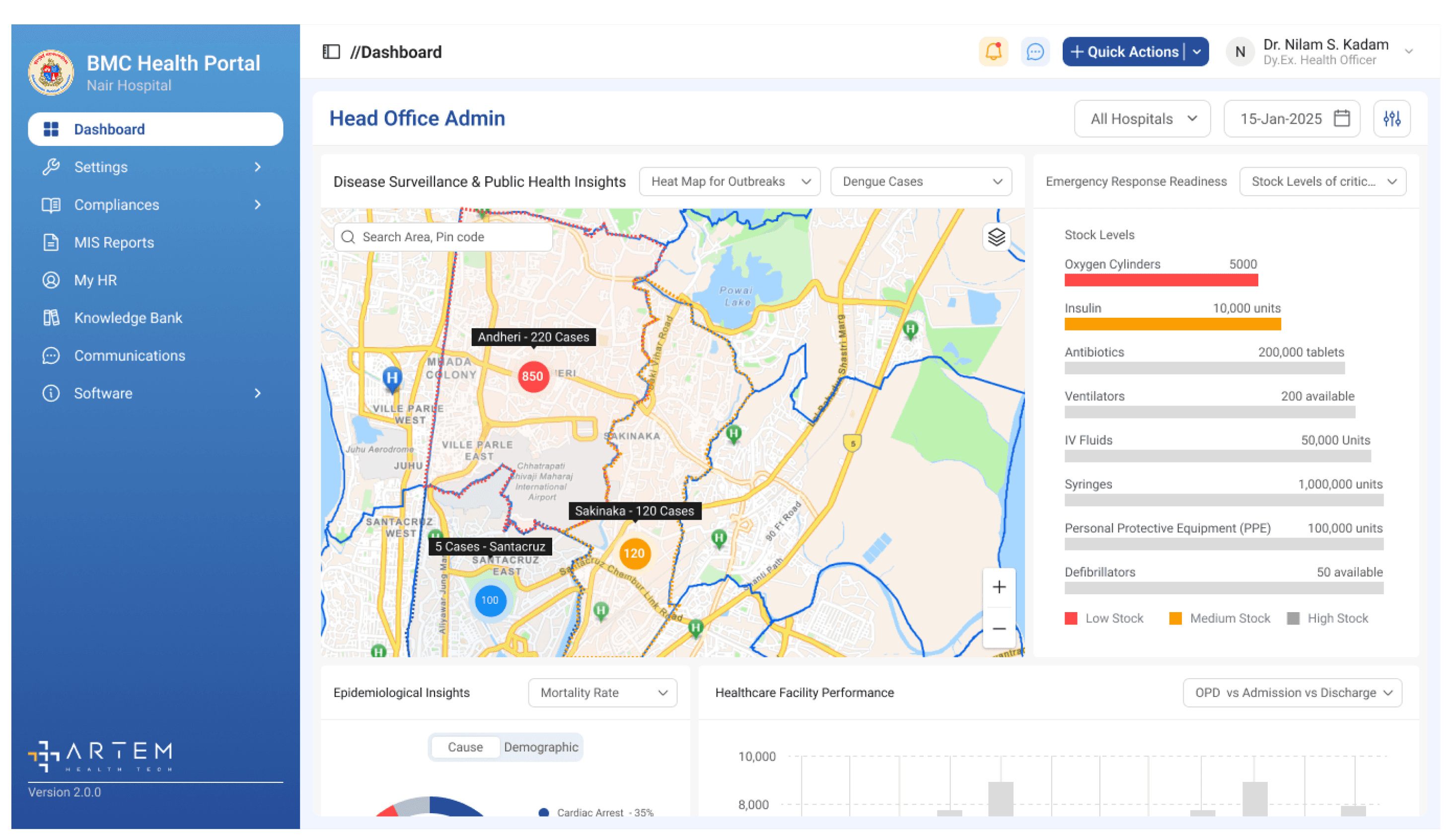
Not just software, but a smart healthcare ecosystem, the centralized HMIS redefines how hospitals operate, communicate, and care. Built around real hospital workflows, it integrates 40+ intelligent modules that streamline processes, reduce manual effort, and ensure seamless data flow. Every stakeholder, from nurses and pharmacists to administrators and patients, interacts through role-based logins and tailored dashboards, offering only what’s relevant to their function.
Not just software, but a smart healthcare ecosystem, the centralized HMIS redefines how hospitals operate, communicate, and care. Built around real hospital workflows, it integrates 40+ intelligent modules that streamline processes, reduce manual effort, and ensure seamless data flow. Every stakeholder, from nurses and pharmacists to administrators and patients, interacts through role-based logins and tailored dashboards, offering only what’s relevant to their function.
Research & Design Framework
Approach
Framework
Research Methodology
A Qualitative Research approach combining Ethnographic and Generative Research Methods to understand stakeholder behaviours, workflows, and challenges across Public Hospitals. Ethnographic research involved on-site observations and contextual inquiries, while generative research explored user needs, motivations, and decision-making through interviews and participatory methods.
Generative Research
Ethnographic Research
Secondary Research
Analysis
Discussion
Interpretation
Fly on the wall
In-Depth Interviews
Shadowing
Persona Development
Field Notes & Contextual Inquiry
Interaction Mapping
Comparative Analysis
HMIS Frameworks
HCI Principles
Research & Design Framework
Approach
Framework
Research Methodology
A Qualitative Research approach combining Ethnographic and Generative Research Methods to understand stakeholder behaviours, workflows, and challenges across Public Hospitals. Ethnographic research involved on-site observations and contextual inquiries, while generative research explored user needs, motivations, and decision-making through interviews and participatory methods.
Generative Research
Ethnographic Research
Secondary Research
Analysis
Discussion
Interpretation
Fly on the wall
In-Depth Interviews
Shadowing
Persona Development
Field Notes & Contextual Inquiry
Interaction Mapping
Comparative Analysis
HMIS Frameworks
HCI Principles
Research & Design Framework
Approach
Framework
Research Methodology
A Qualitative Research approach combining Ethnographic and Generative Research Methods to understand stakeholder behaviours, workflows, and challenges across Public Hospitals. Ethnographic research involved on-site observations and contextual inquiries, while generative research explored user needs, motivations, and decision-making through interviews and participatory methods.
Generative Research
Ethnographic Research
Secondary Research
Analysis
Discussion
Interpretation
Fly on the wall
In-Depth Interviews
Shadowing
Persona Development
Field Notes & Contextual Inquiry
Interaction Mapping
Comparative Analysis
HMIS Frameworks
HCI Principles
Research
Primary Research
Secondary Research
Service Blueprint
System Overview
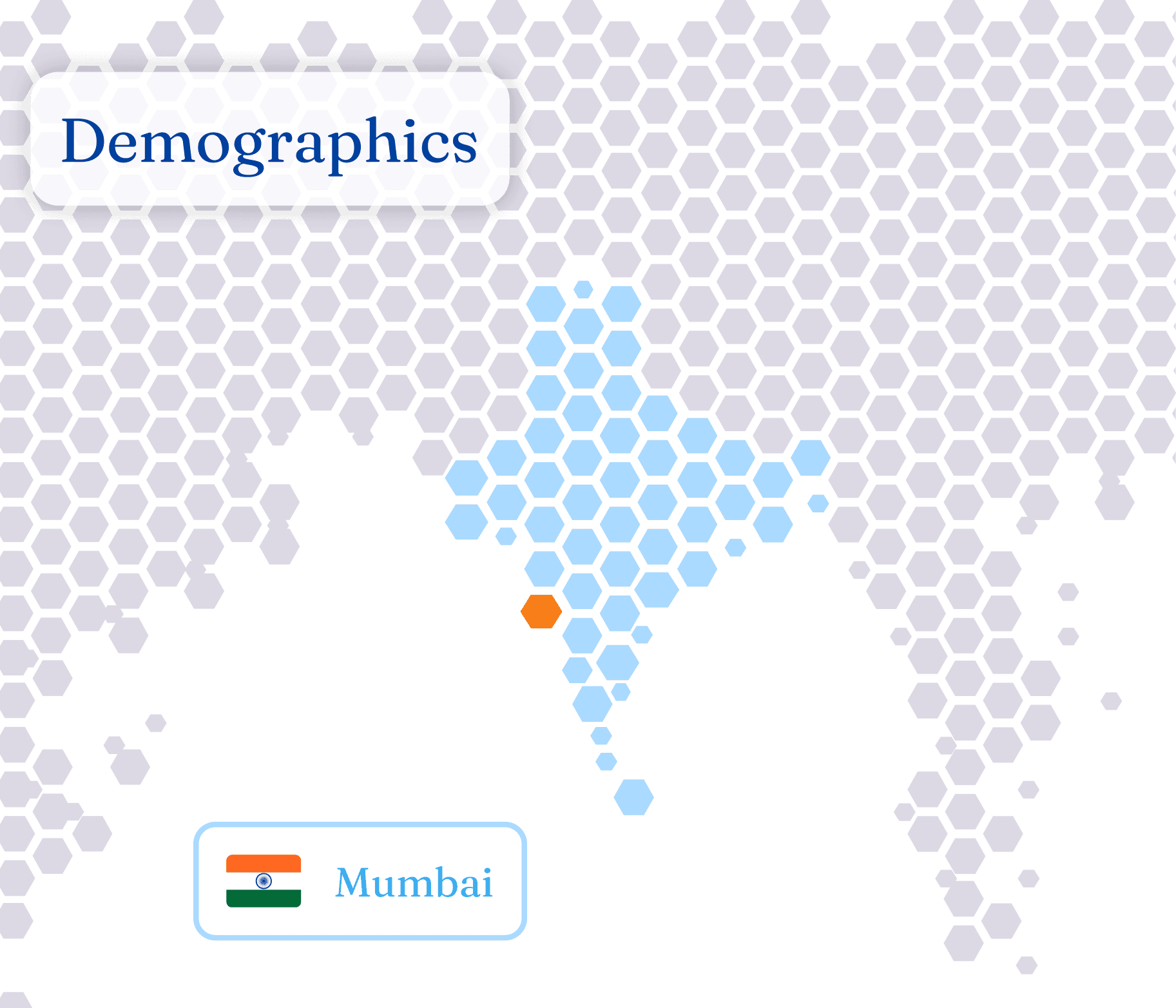
For this project, Mumbai, one of the largest municipal healthcare network in India, was chosen as the focus area. Covering 434 sq. km and serving millions across diverse socio-economic groups, its public healthcare system operates with 20,000+ employees across hospitals, dispensaries, and clinics, making it a complex and dynamic ecosystem.
Health Posts
Dispensaries
Maternity Homes
Peripheral Hospitals
Specialty Hospitals
Major Hospitals
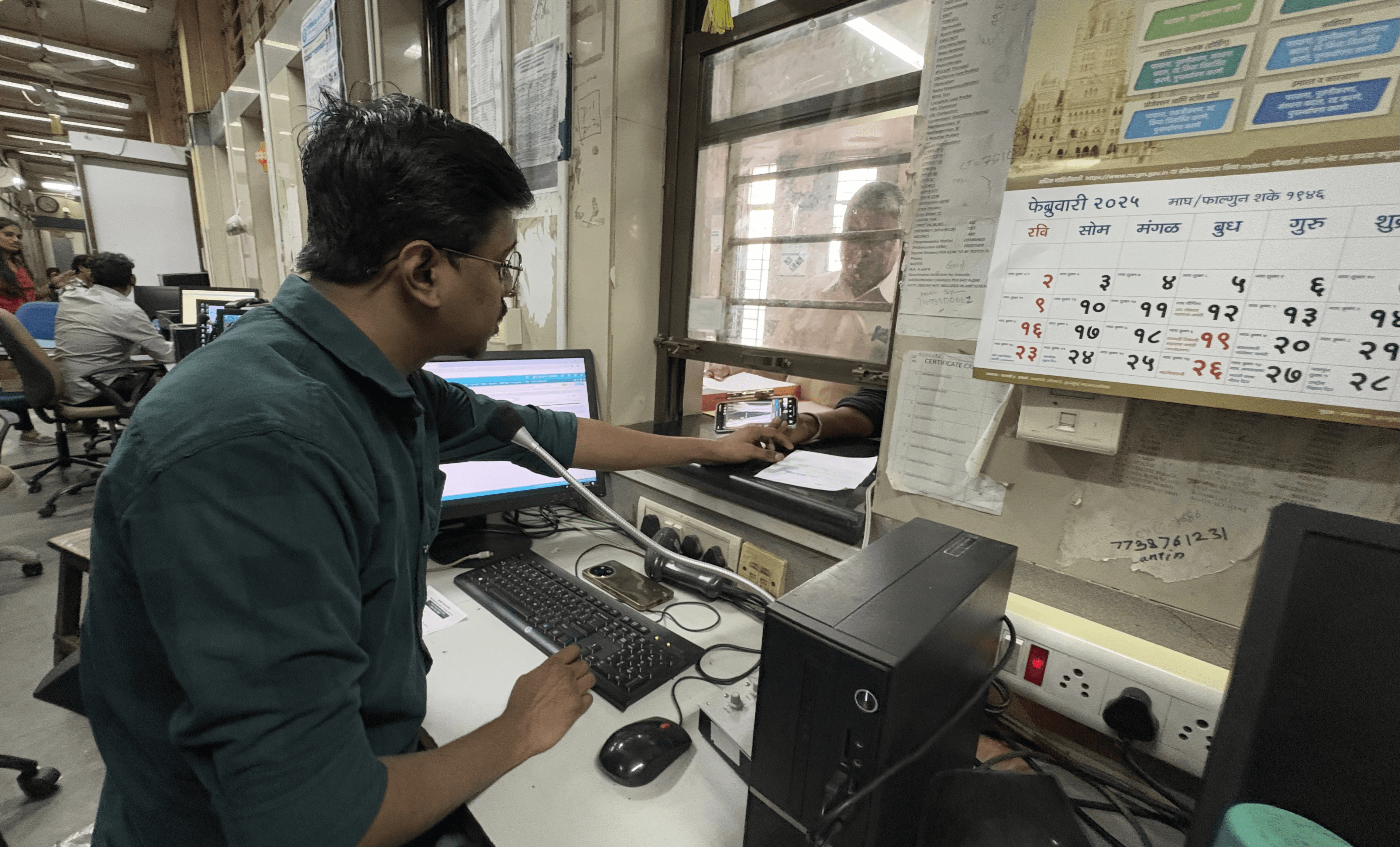
Listening to the Real Players :
Stakeholder Interviews
Method Used: Fly-on-the-Wall (non-participatory observation)
Location: BYL Nair Hospital, Mumbai
Focus: Authentic, uninterrupted hospital workflows
Focus Area: Workflow Mapping, Stakeholder Dynamics, Technology Interaction, Hospital Infrastructure.
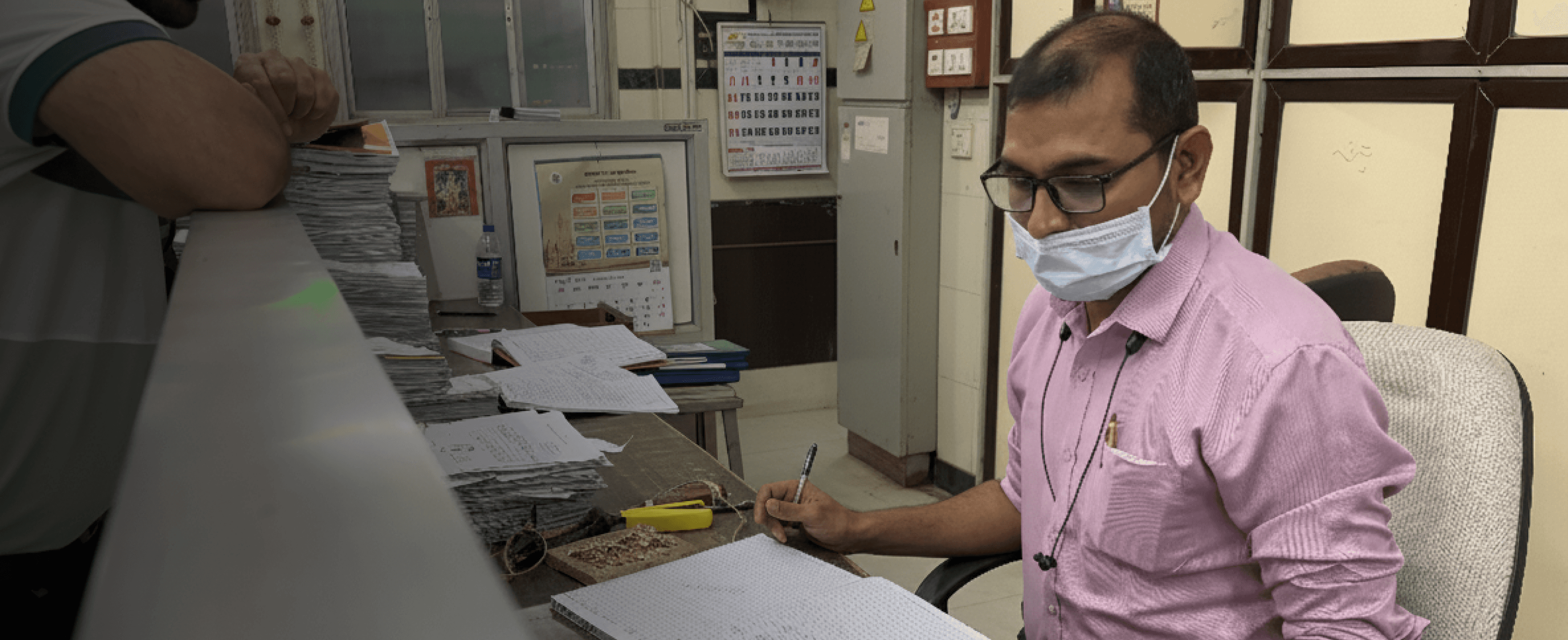
Listening to the Real Players :
Stakeholder Interviews
Scope:
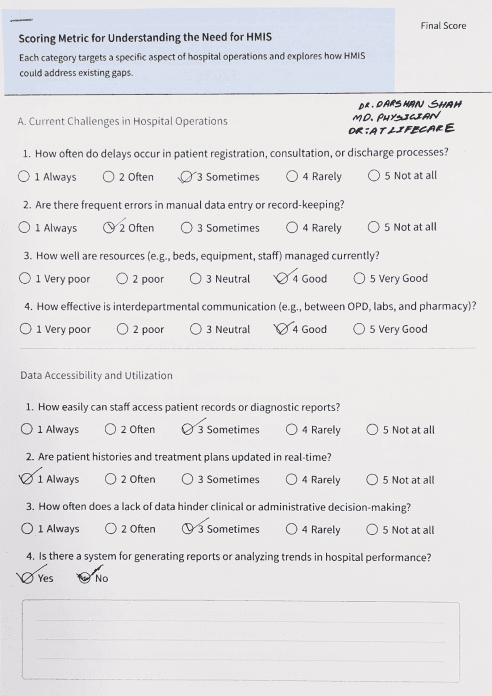
60+ in-depth interviews (Voice recordings & Questionnaire Forms)
45+ departments covered
Stakeholders ranged from support staff to the Dean
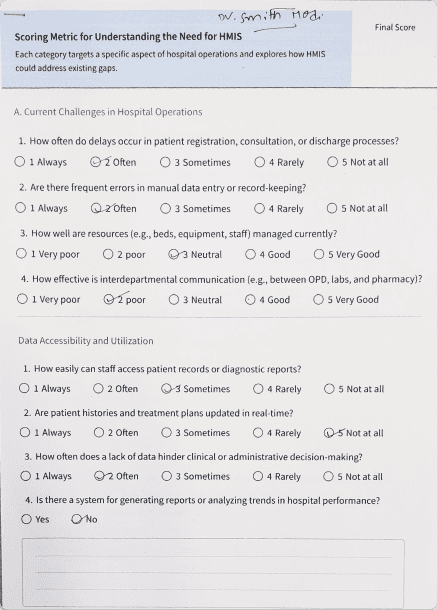
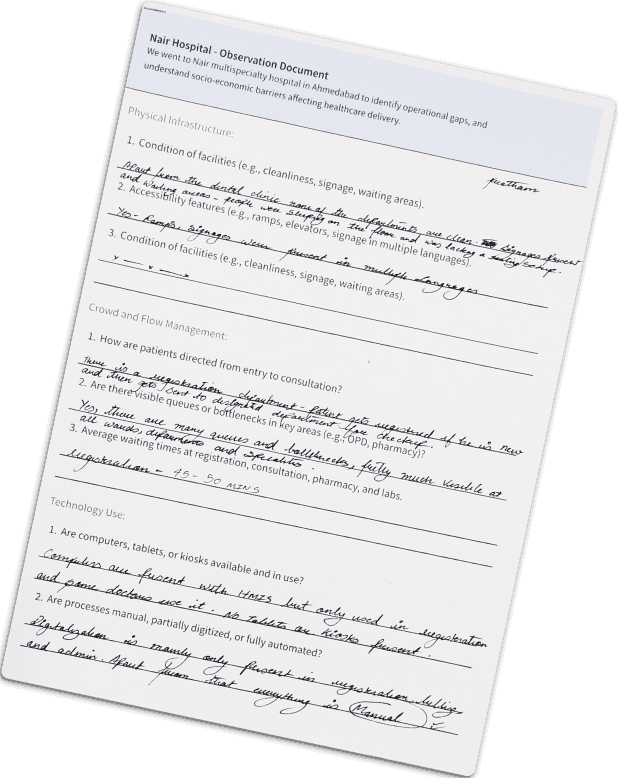
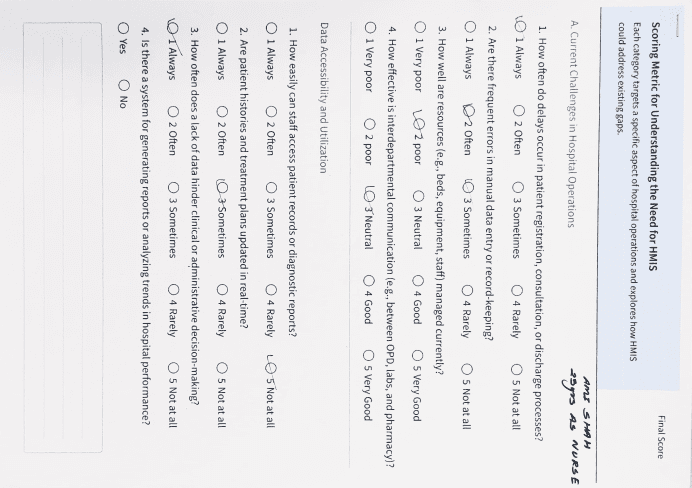
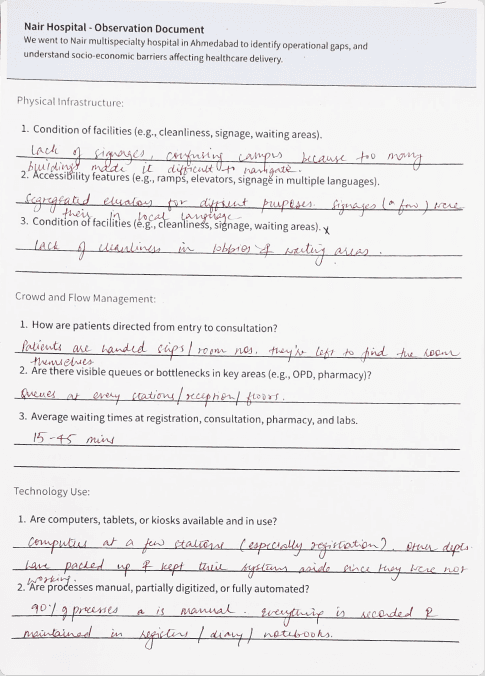
Insights
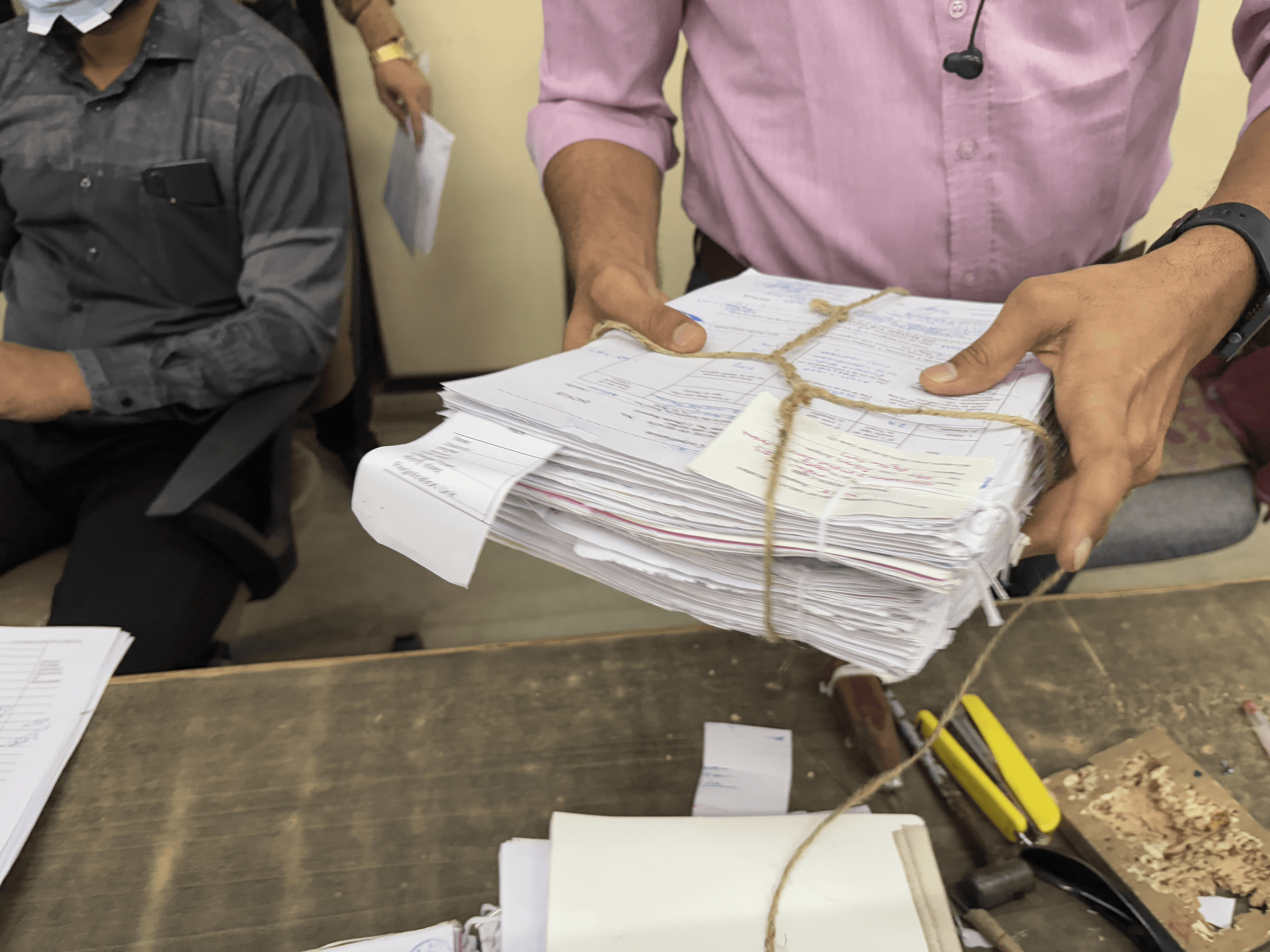
Insight 1
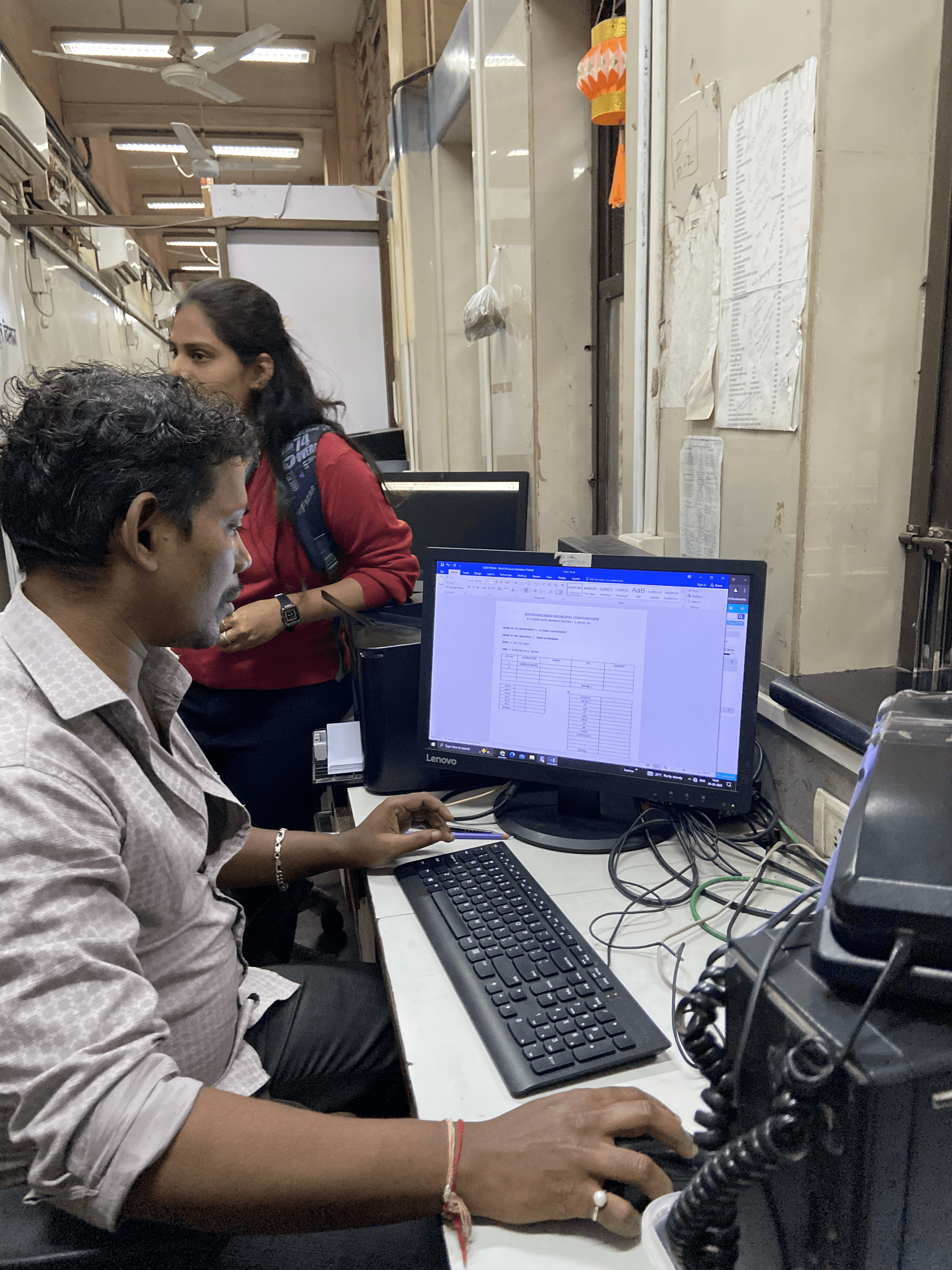
Manual Entry and Billions of Forms
Hospitals use manual registers and paper forms for patient registration, treatment, billing, pharmacy records, and referrals
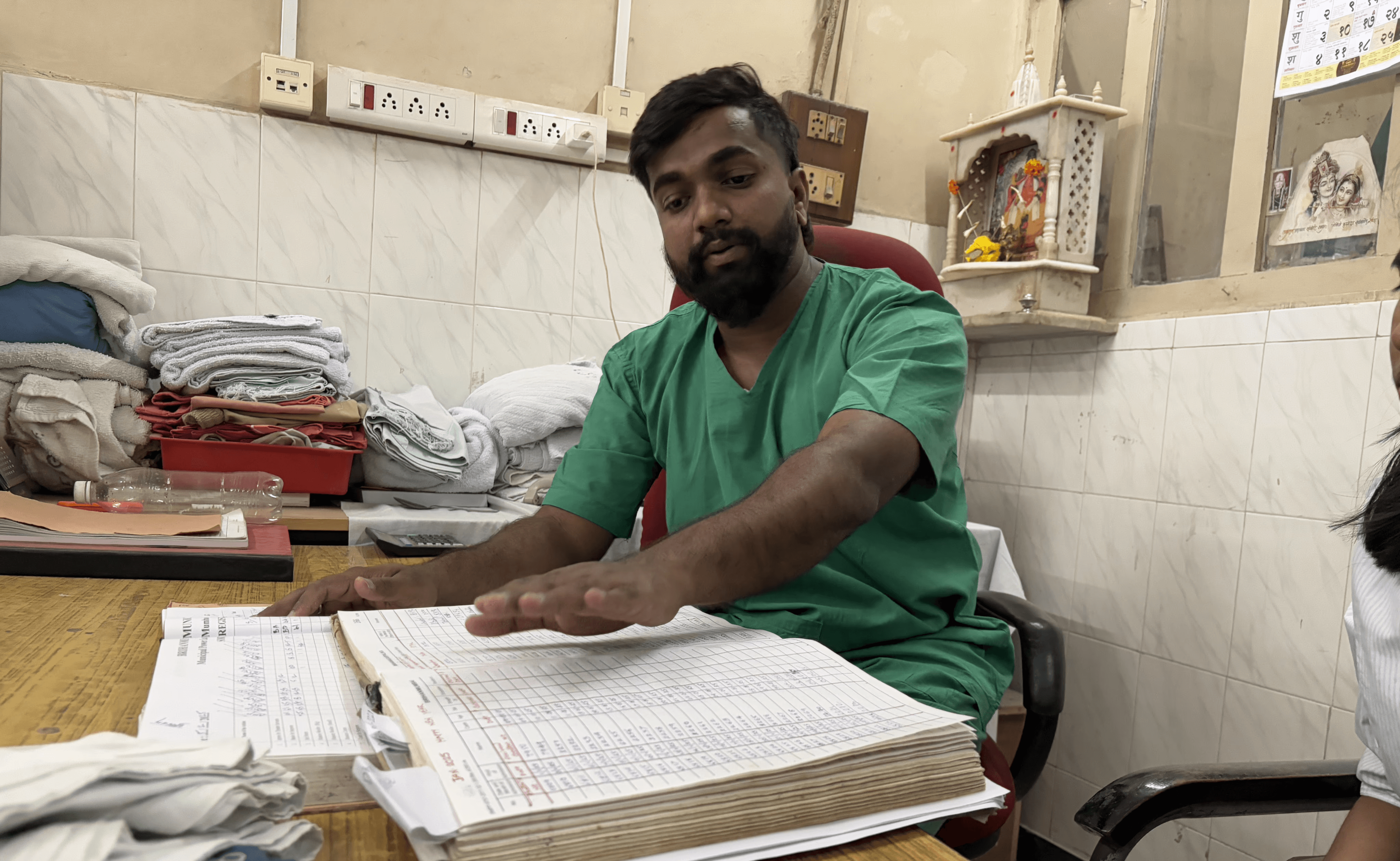
Insight 2
Data Duplication and Redundant Files in Each Department
The lack of integrated systems often forces staff to repeatedly enter the same patient information across different departments, leading to data duplication.
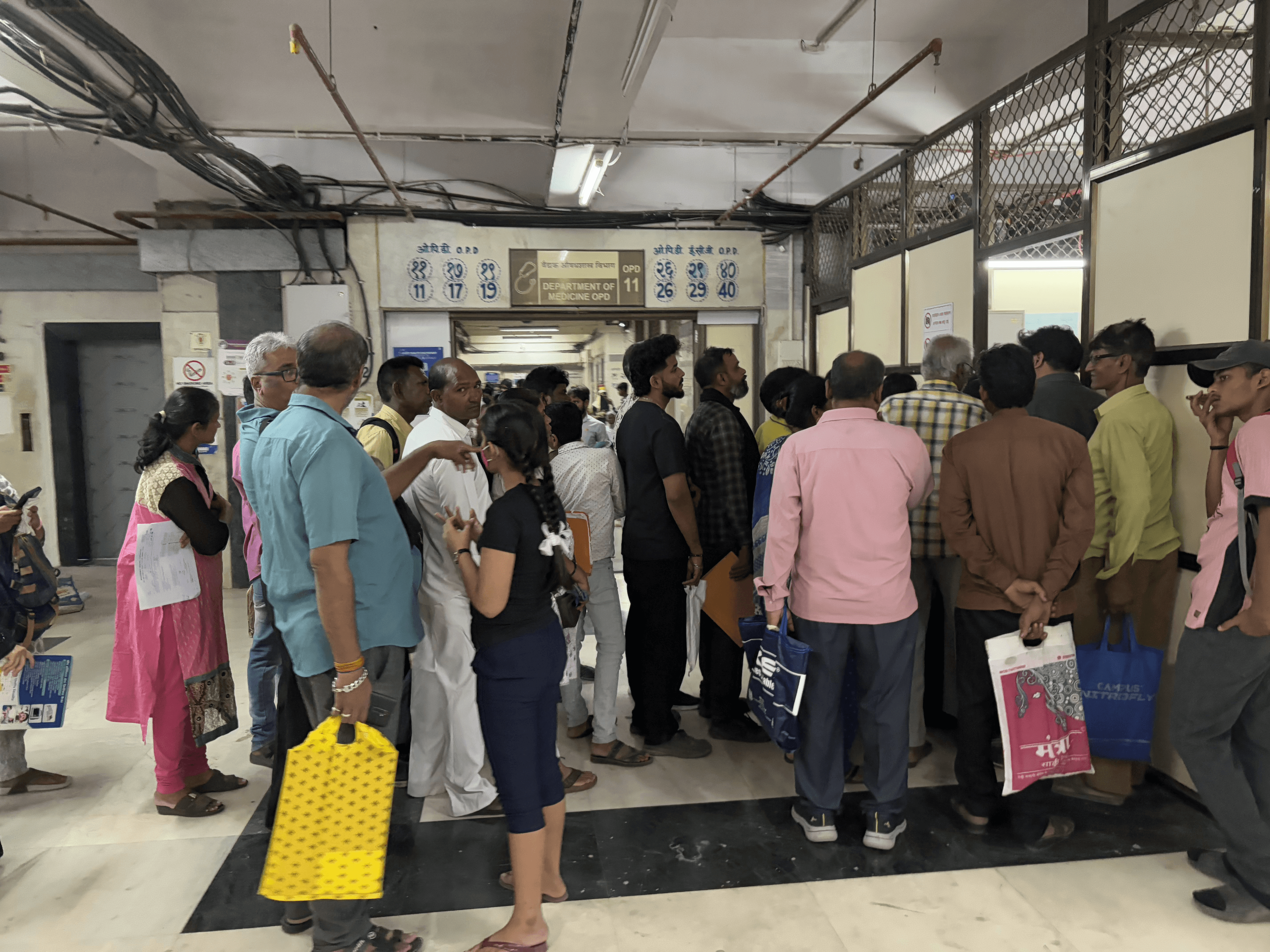
Insight 3
Cross-department Approvals Burden Patients
Patients and families always have to visit several hospital departments for test approvals, referrals, insurance claims, and billing.
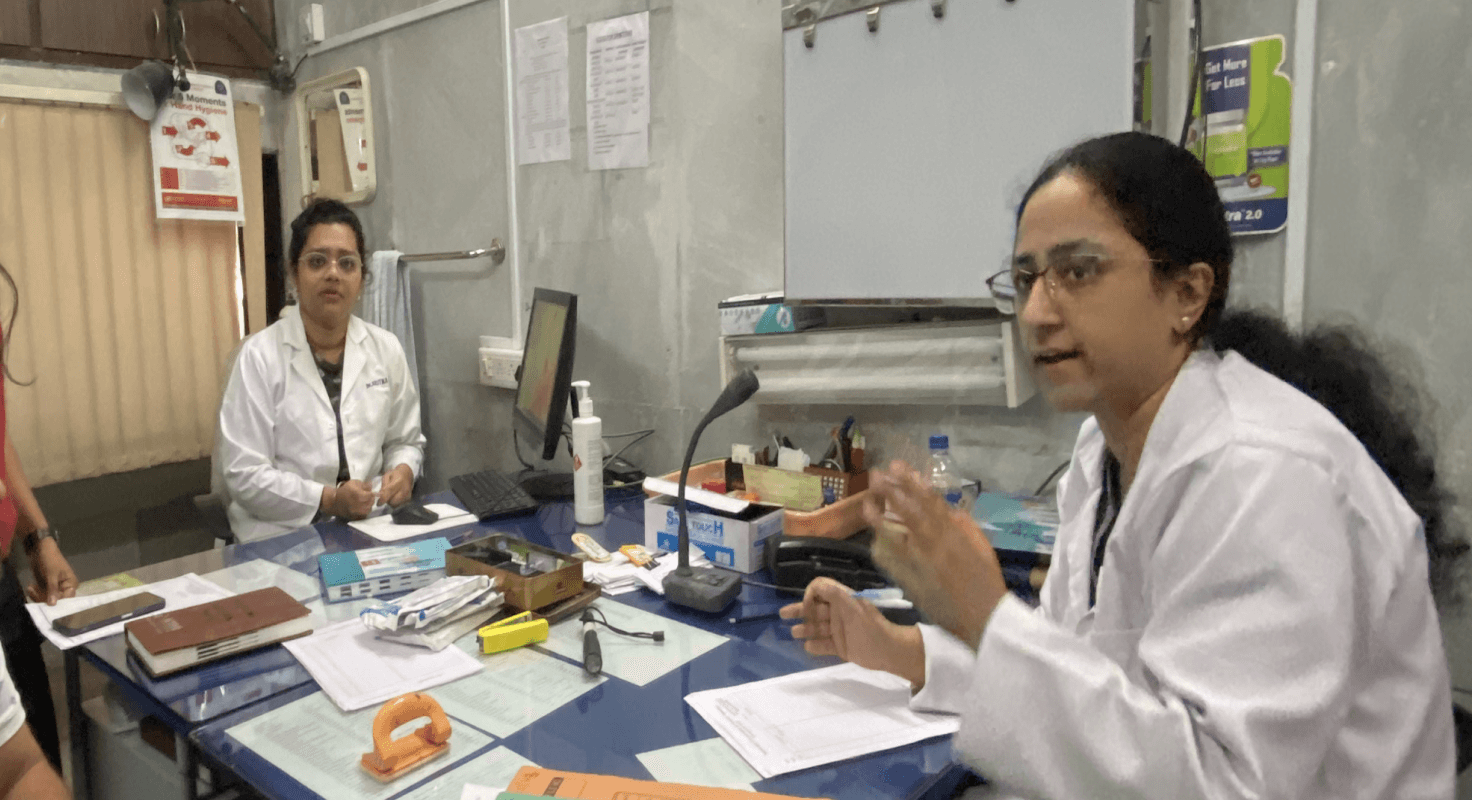
Insight 4
Hesitancy Toward Using Digital Systems
Doctors avoid using Electronic Health Records due to poor usability, disrupted workflows, and lack of contextual relevance, highlighting a critical gap in digital healthcare.
Insight 5
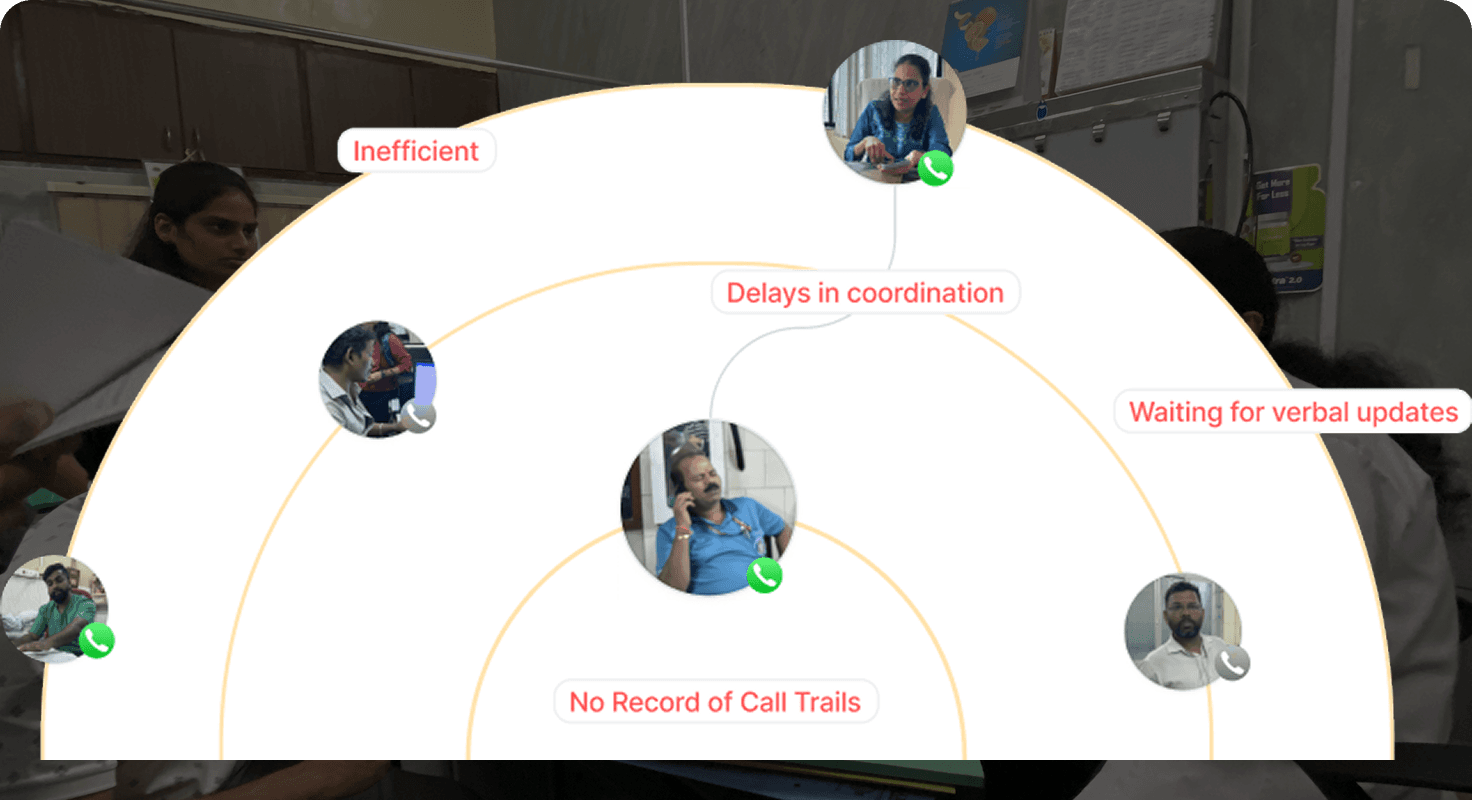
Communication Gap and Delays due to Call-Based Communication
Hospitals rely heavily on phone calls for critical communication between departments leads to delay in decision making and can create critical issues.
Insight 6
Digital Forms as a Barrier Rather Than a Solution
Existing HMIS systems mimic paper forms, forcing doctors, to spend more time typing than treating, who get only 2–3 minutes per patient. It reduces efficiency of care.
Research
Primary Research
Secondary Research
Service Blueprint
System Overview
For this project, Mumbai, one of the largest municipal healthcare network in India, was chosen as the focus area. Covering 434 sq. km and serving millions across diverse socio-economic groups, its public healthcare system operates with 20,000+ employees across hospitals, dispensaries, and clinics, making it a complex and dynamic ecosystem.
Health Posts
Dispensaries
Maternity Homes
Peripheral Hospitals
Specialty Hospitals
Major Hospitals
Listening to the Real Players :
Stakeholder Interviews
Method Used: Fly-on-the-Wall (non-participatory observation)
Location: BYL Nair Hospital, Mumbai
Focus: Authentic, uninterrupted hospital workflows
Focus Area: Workflow Mapping, Stakeholder Dynamics, Technology Interaction, Hospital Infrastructure.
Listening to the Real Players :
Stakeholder Interviews
Scope:
60+ in-depth interviews (Voice recordings & Questionnaire Forms)
45+ departments covered
Stakeholders ranged from support staff to the Dean
Insights
Insight 1
Manual Entry and Billions of Forms
Hospitals use manual registers and paper forms for patient registration, treatment, billing, pharmacy records, and referrals
Insight 2
Data Duplication and Redundant Files in Each Department
The lack of integrated systems often forces staff to repeatedly enter the same patient information across different departments, leading to data duplication.
Insight 3
Cross-department Approvals Burden Patients
Patients and families always have to visit several hospital departments for test approvals, referrals, insurance claims, and billing.
Insight 4
Hesitancy Toward Using Digital Systems
Doctors avoid using Electronic Health Records due to poor usability, disrupted workflows, and lack of contextual relevance, highlighting a critical gap in digital healthcare.
Insight 5
Communication Gap and Delays due to Call-Based Communication
Hospitals rely heavily on phone calls for critical communication between departments leads to delay in decision making and can create critical issues.
Insight 6
Digital Forms as a Barrier Rather Than a Solution
Existing HMIS systems mimic paper forms, forcing doctors, to spend more time typing than treating, who get only 2–3 minutes per patient. It reduces efficiency of care.
Research
Primary Research
Secondary Research
Service Blueprint
System Overview
For this project, Mumbai, one of the largest municipal healthcare network in India, was chosen as the focus area. Covering 434 sq. km and serving millions across diverse socio-economic groups, its public healthcare system operates with 20,000+ employees across hospitals, dispensaries, and clinics, making it a complex and dynamic ecosystem.
Health Posts
Dispensaries
Maternity Homes
Peripheral Hospitals
Specialty Hospitals
Major Hospitals
Listening to the Real Players :
Stakeholder Interviews
Method Used: Fly-on-the-Wall (non-participatory observation)
Location: BYL Nair Hospital, Mumbai
Focus: Authentic, uninterrupted hospital workflows
Focus Area: Workflow Mapping, Stakeholder Dynamics, Technology Interaction, Hospital Infrastructure.
Listening to the Real Players :
Stakeholder Interviews
Scope:
60+ in-depth interviews (Voice recordings & Questionnaire Forms)
45+ departments covered
Stakeholders ranged from support staff to the Dean
Insights
Insight 1
Manual Entry and Billions of Forms
Hospitals use manual registers and paper forms for patient registration, treatment, billing, pharmacy records, and referrals
Insight 2
Data Duplication and Redundant Files
The lack of integrated systems often forces staff to repeatedly enter the same patient information across different departments, leading to data duplication.
Insight 3
Cross-department Approvals Burden Patients
Patients and families always have to visit several hospital departments for test approvals, referrals, insurance claims, and billing.
Insight 4
Hesitancy Toward Using Digital Systems
Doctors avoid using Electronic Health Records due to poor usability, disrupted workflows, and lack of contextual relevance, highlighting a critical gap in digital healthcare.
Insight 5
Communication Gap and Delays due to Call-Based Communication
Hospitals rely heavily on phone calls for critical communication between departments leads to delay in decision making and can create critical issues.
Insight 6
Digital Forms as a Barrier Rather Than a Solution
Existing HMIS systems mimic paper forms, forcing doctors, to spend more time typing than treating, who get only 2–3 minutes per patient. It reduces efficiency of care.
Define
Define
5Ws & 1H
5Ws & 1H
What ?
Why ?
When ?
Who ?
Where ?
How ?
Problem Statement
Problem Statement
Public hospitals across India rely on fragmented, paper-heavy workflows that scatter patient data, slow care, and overwhelm staff. Existing HMIS systems often replicate physical forms digitally, adding friction instead of reducing it. Disconnected departments, inconsistent documentation, and manual data transfer force patients to carry their own records, creating delays, errors, and poor coordination.
Public hospitals across India rely on fragmented, paper-heavy workflows that scatter patient data, slow care, and overwhelm staff. Existing HMIS systems often replicate physical forms digitally, adding friction instead of reducing it. Disconnected departments, inconsistent documentation, and manual data transfer force patients to carry their own records, creating delays, errors, and poor coordination.


Ideation
Ideation
Exisiting HMIS Issues
Exisiting HMIS Issues
Complex, unintuitive interfaces that demand excessive manual entry and offer poor interdepartmental communication.
Complex, unintuitive interfaces that demand excessive manual entry and offer poor interdepartmental communication.
Workflow Problems
Workflow Problems
Doctors and staff rely on established offline habits, struggle with high patient volumes, and often create workarounds to bypass inefficient digital systems.
Doctors and staff rely on established offline habits, struggle with high patient volumes, and often create workarounds to bypass inefficient digital systems.
The Unique Value Proposition
The Unique Value Proposition
Building technology that blends seamlessly into clinical workflows, so smooth and intuitive that it feels
Building technology that blends seamlessly into clinical workflows, so smooth and intuitive that it feels
invisible
invisible
Brainstorming
Brainstorming
Explored innovative approaches to create intuitive, effective healthcare solutions that accommodate diverse user needs and environments.
Explored innovative approaches to create intuitive, effective healthcare solutions that accommodate diverse user needs and environments.
Finalized Modules- Based on Client’s Requirements and Needs
Finalized Modules- Based on Client’s Requirements and Needs
IPD
OPD
Registration
Clinical Support Services
Medical Social Welfare (MSW)
Central Analytical Lab
Forensic & Toxicology
Radiation Oncology
Speech Therapy & Audiology
Disease Management Module
Content Management Portal
Linen and Laundary
Medico-Legal Case
Asset and Maintenance
Appointment Scheduling
Nurse App
Doctor App
Citizen Portal
Technician App
Support Staff App
Issue of Certificate (IOC)
Human Resource Management (HRMS)
Reporting and Analytics
Diet and Kitchen
Mortuary
Inventory
Facility Booking
Patient App
PACS
Endoscopy
Ambulance
Labour
Emergency
Blood Bank
Autopsy
MRD
HBOT
Laboratory
CSSD
BIlling
HMIS
Modules
IPD
OPD
Registration
Clinical Support Services
Medical Social Welfare (MSW)
Central Analytical Lab
Forensic & Toxicology
Radiation Oncology
Speech Therapy & Audiology
Disease Management Module
Content Management Portal
Linen and Laundary
Medico-Legal Case
Asset and Maintenance
Appointment Scheduling
Nurse App
Doctor App
Citizen Portal
Technician App
Support Staff App
Issue of Certificate (IOC)
Human Resource Management (HRMS)
Reporting and Analytics
Diet and Kitchen
Mortuary
Inventory
Facility Booking
Patient App
PACS
Endoscopy
Ambulance
Labour
Emergency
Blood Bank
Autopsy
MRD
HBOT
Laboratory
CSSD
BIlling
HMIS
Modules
IPD
OPD
Registration
Clinical Support Services
Medical Social Welfare (MSW)
Central Analytical Lab
Forensic & Toxicology
Radiation Oncology
Speech Therapy & Audiology
Disease Management Module
Content Management Portal
Linen and Laundary
Medico-Legal Case
Asset and Maintenance
Appointment Scheduling
Nurse App
Doctor App
Citizen Portal
Technician App
Support Staff App
Issue of Certificate (IOC)
Human Resource Management (HRMS)
Reporting and Analytics
Diet and Kitchen
Mortuary
Inventory
Facility Booking
Patient App
PACS
Endoscopy
Ambulance
Labour
Emergency
Blood Bank
Autopsy
MRD
HBOT
Laboratory
CSSD
BIlling
HMIS
Modules
Conceptualization — Core Points to Consider for Prototyping
Conceptualization — Core Points to Consider for Prototyping
Centralized Patient Health Records
SNOMED CT & HL7 Standards Integration
AI-Powered Consultation Summaries
IoT Vitals Auto-Population Reduces Consultation Time
Scribe-to-text Feature to keep the Write-first Model
Role-Based Access
Dashboards
Easy Adoption Modular Framework
Interoperable & Scalable Product Architecture
HCI-Driven Design to Improve Usability
Real-Time Notifications and Alerts Reduces Error
Centralized Patient Health Records
SNOMED CT & HL7 Standards Integration
AI-Powered Consultation Summaries
IoT Vitals Auto-Population Reduces Consultation Time
Scribe-to-text Feature to keep the Write-first Model
Role-Based Access
Dashboards
Easy Adoption Modular Framework
Interoperable & Scalable Product Architecture
HCI-Driven Design to Improve Usability
Real-Time Notifications and Alerts Reduces Error
Centralized Patient Health Records
SNOMED CT & HL7 Standards Integration
AI-Powered Consultation Summaries
IoT Vitals Auto-Population Reduces Consultation Time
Scribe-to-text Feature to keep the Write-first Model
Role-Based Access
Dashboards
Easy Adoption Modular Framework
Interoperable & Scalable Product Architecture
HCI-Driven Design to Improve Usability
Real-Time Notifications and Alerts Reduces Error
Prototype
Prototype
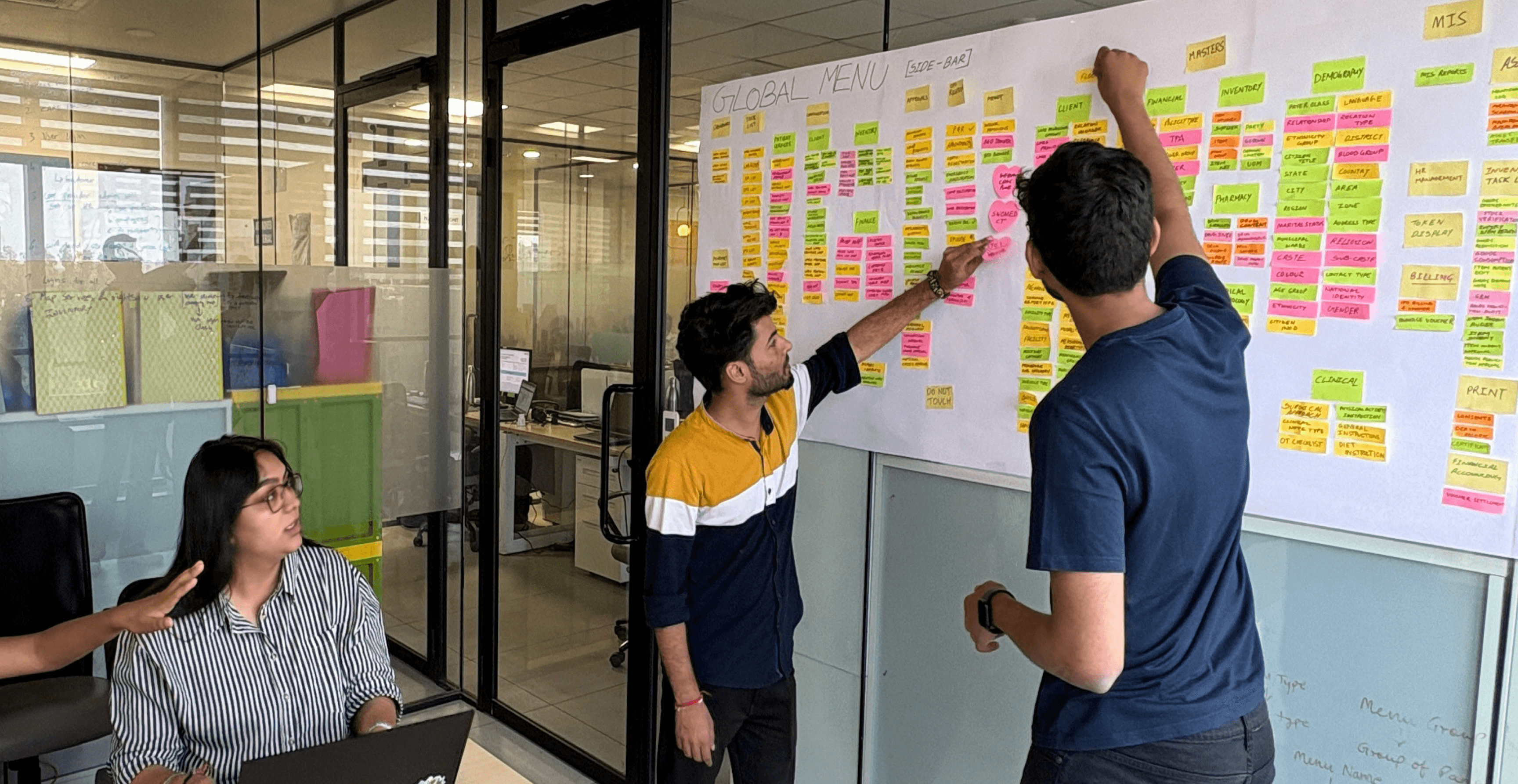
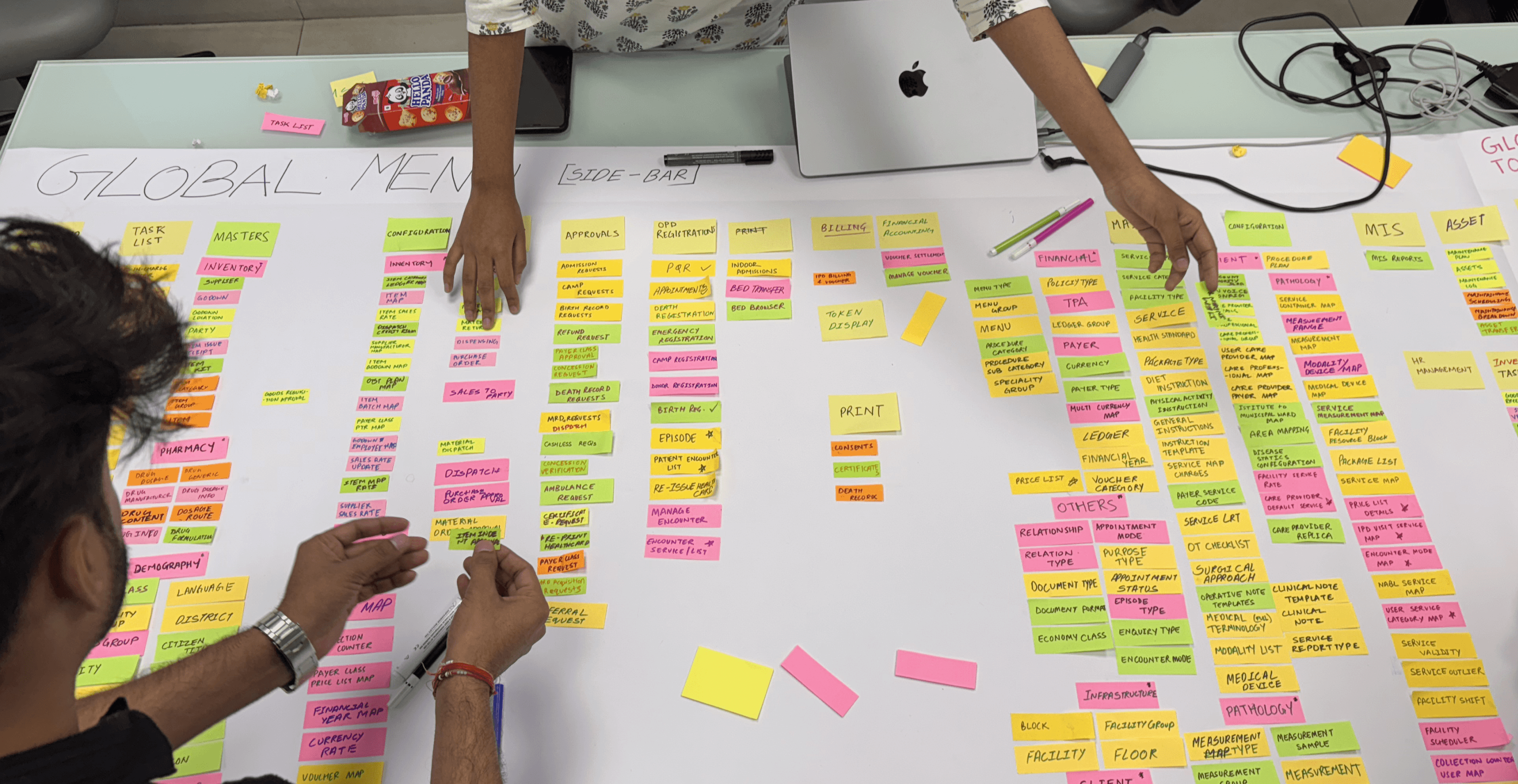
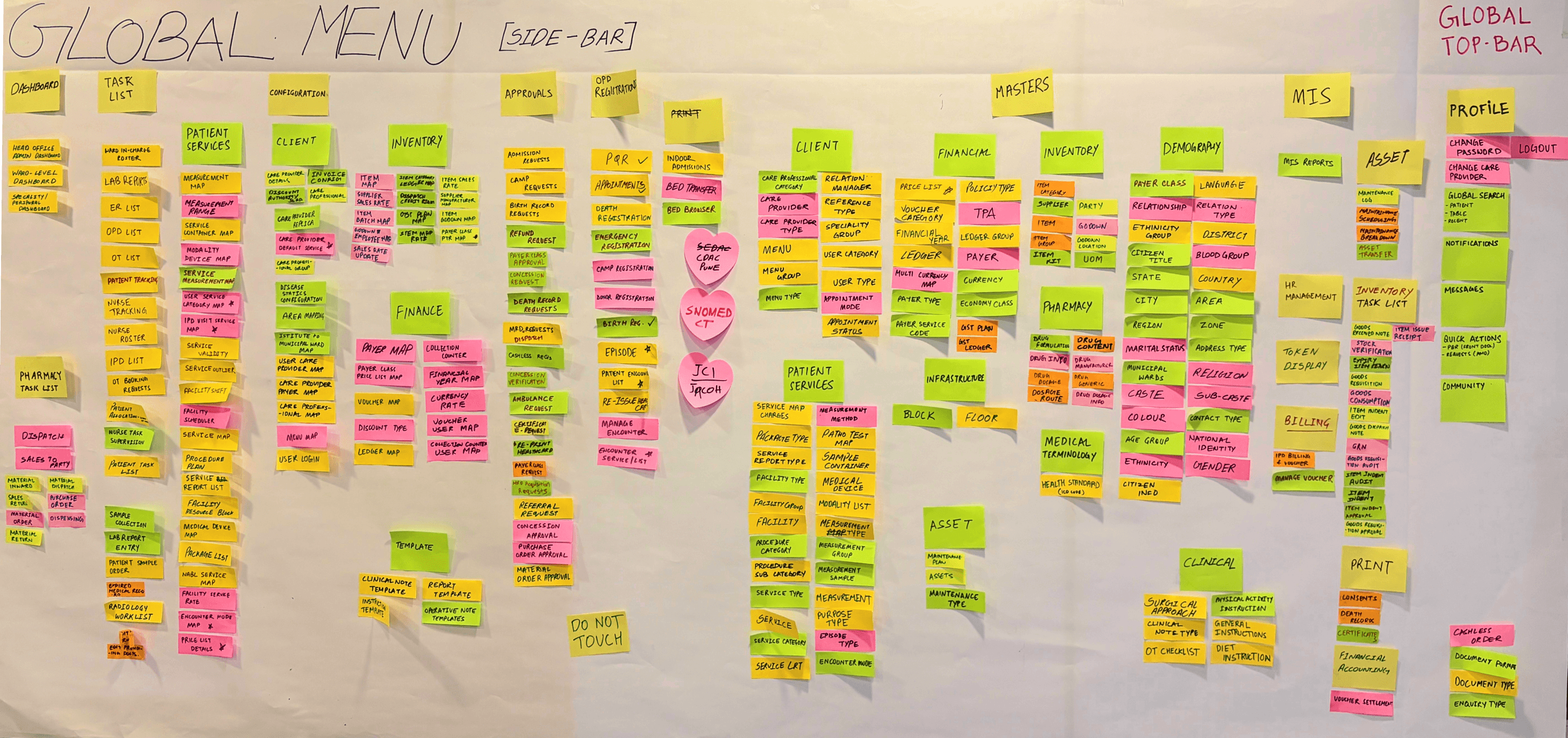
Card Sorting Workshop With Key Stakeholders
Card Sorting Workshop With Key Stakeholders
Masters and Configuration
Distinct categorization to simplify system setup.
Categorized items in Hierarchy
Logical grouping of items for better data organization.
Sorted Objects based on Tasks
Task-oriented structuring to streamline workflows.
Re-Iterated on Labelling
Standardized terminology to enhance user clarity.
Masters and Configuration
Distinct categorization to simplify system setup.
Categorized items in Hierarchy
Logical grouping of items for better data organization.
Sorted Objects based on Tasks
Task-oriented structuring to streamline workflows.
Re-Iterated on Labelling
Standardized terminology to enhance user clarity.
Information Architecture Optimization
Information Architecture Optimization
Adaptive IA
Evolves from structured data hierarchies to intelligent, context-aware interactions.
Composable IA
Flexibly integrates various modules, entities, and services.
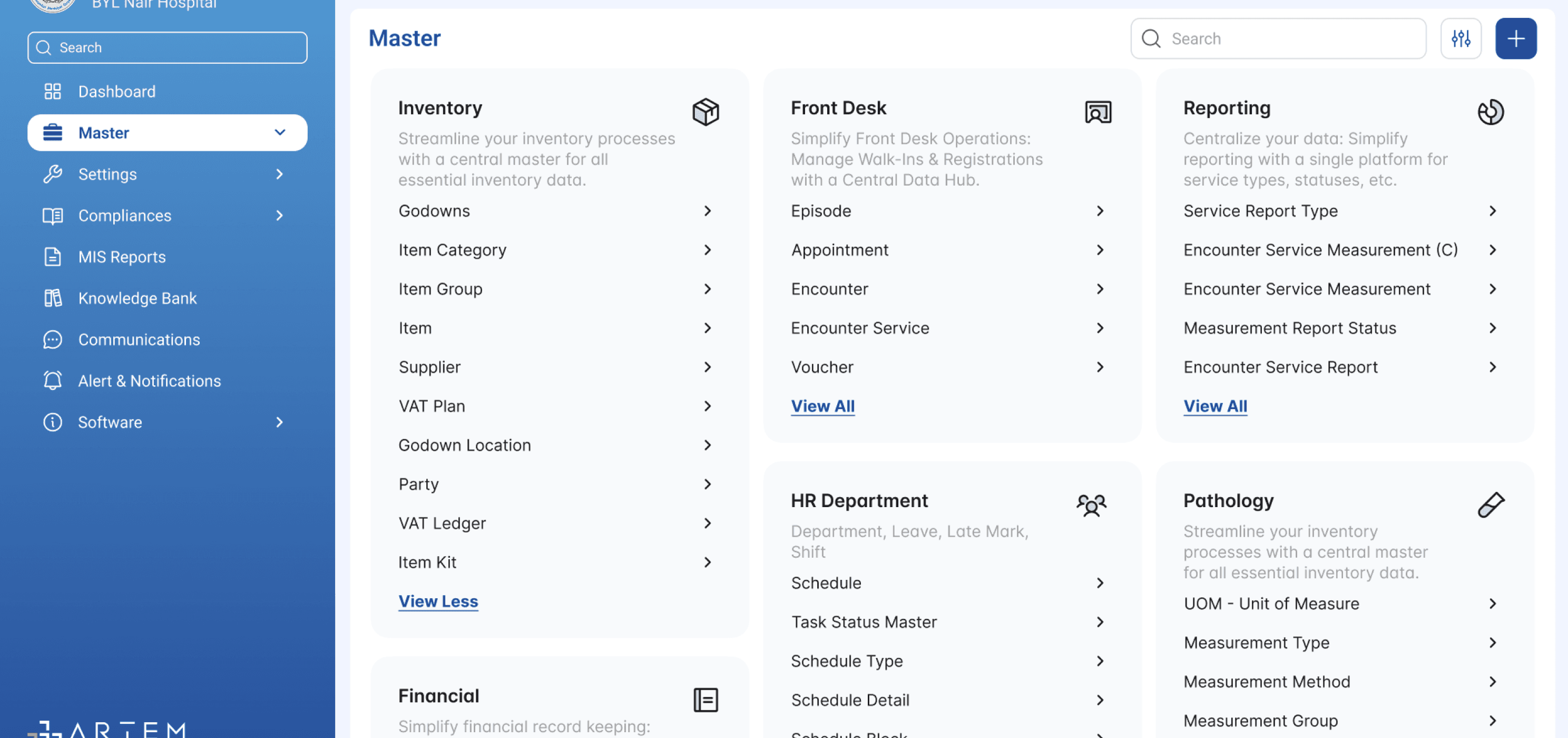
Pages
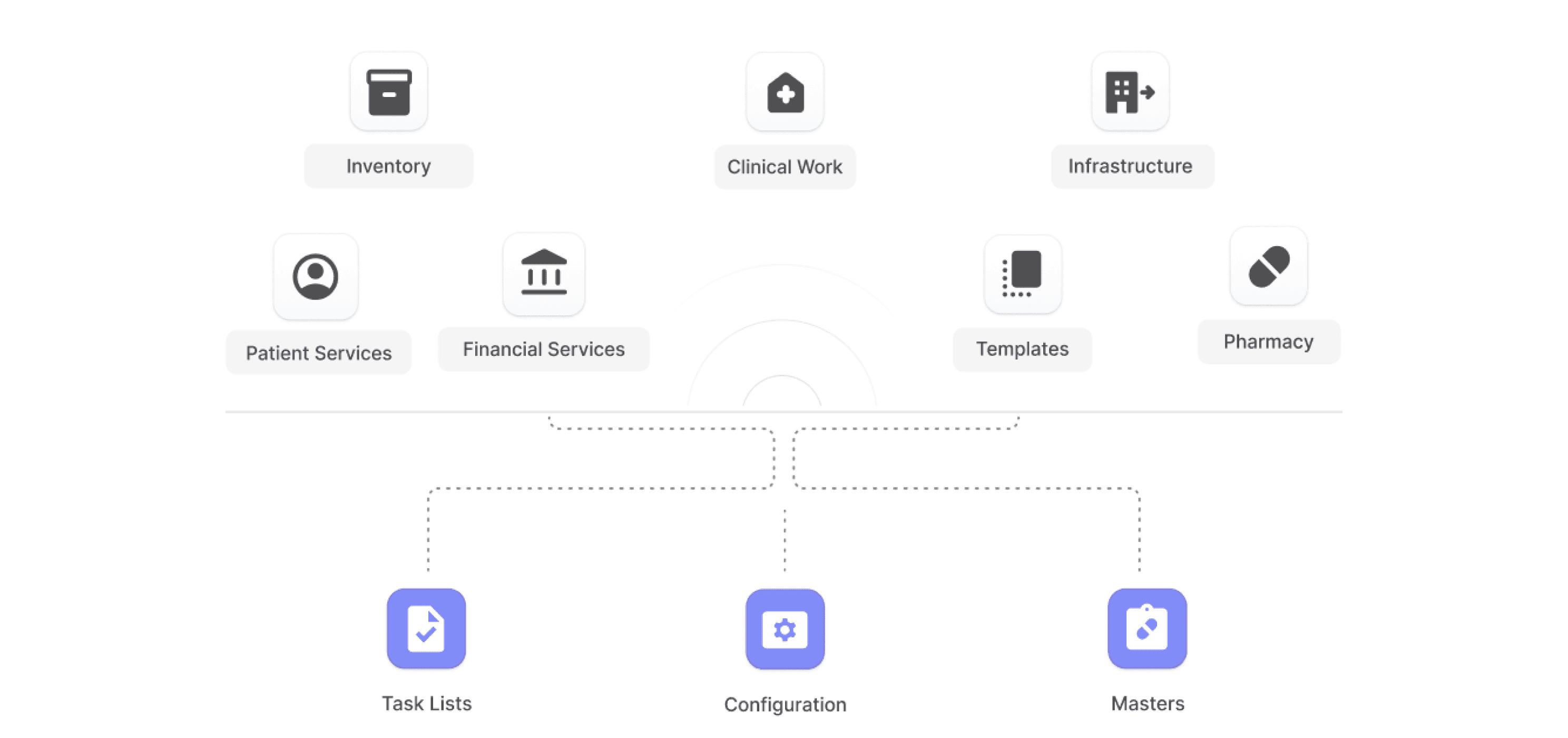
Masters
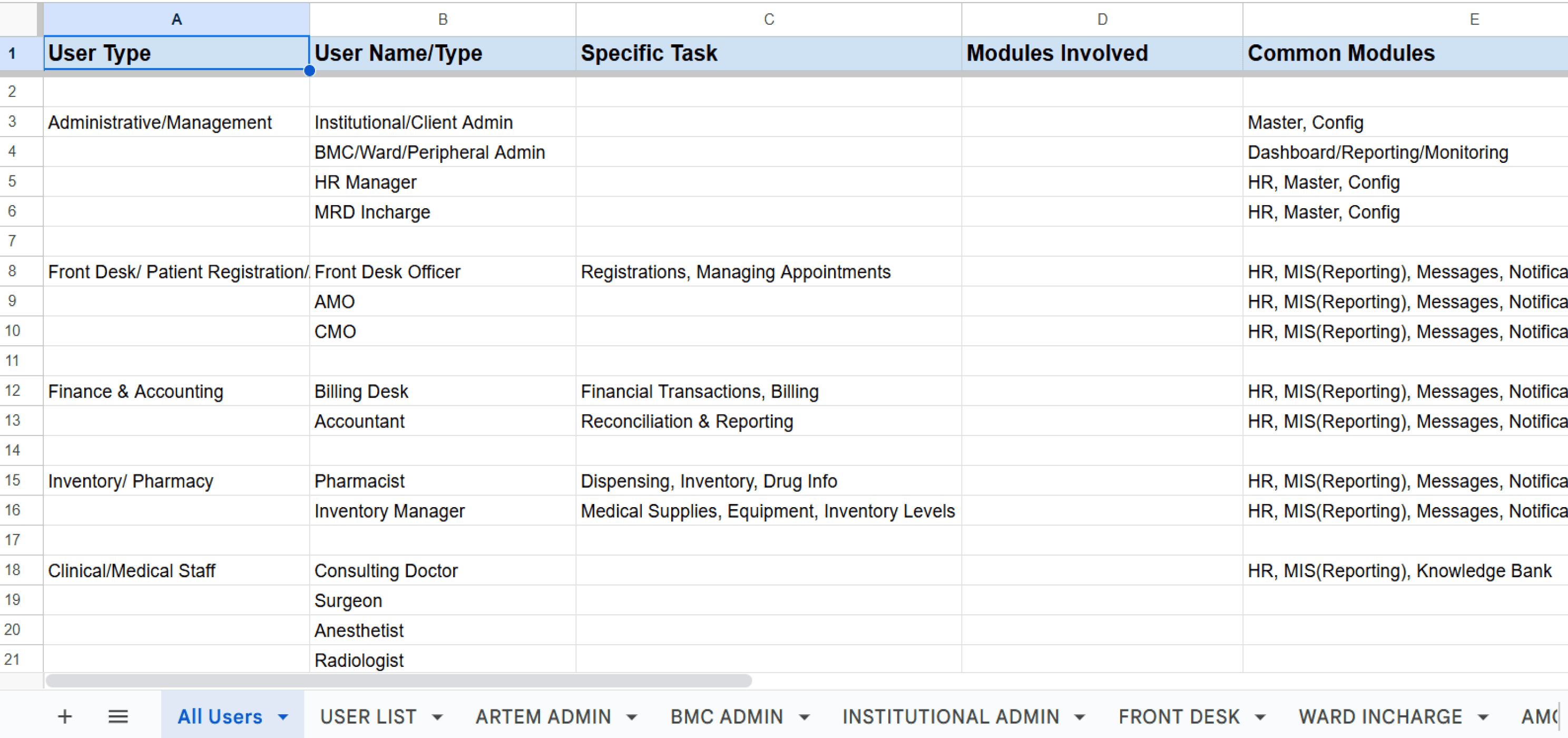
Roles
Adaptive IA
Evolves from structured data hierarchies to intelligent, context-aware interactions.
Composable IA
Flexibly integrates various modules, entities, and services.
We identified 24+ pages with isolated input fields
By merging these pages into relevant modules, we streamlined workflows, reduced unnecessary navigation, and enhanced overall system efficiency
Simplifying Masters and Configurations
After the workshop we reduced combined most modules into 3 categories task lists configuration and masters.
Role-Based Access Matrix
To uphold a consistent data hierarchy for each user, we have documented over 60 user roles in a dedicated Excel spreadsheet to give them rights based on CRUD Method.
Adaptive IA
Evolves from structured data hierarchies to intelligent, context-aware interactions.
Composable IA
Flexibly integrates various modules, entities, and services.
We identified 24+ pages with isolated input fields
By merging these pages into relevant modules, we streamlined workflows, reduced unnecessary navigation, and enhanced overall system efficiency
Simplifying Masters and Configurations
After the workshop we reduced combined most modules into 3 categories task lists configuration and masters.
Role-Based Access Matrix
To uphold a consistent data hierarchy for each user, we have documented over 60 user roles in a dedicated Excel spreadsheet to give them rights based on CRUD Method.
Standardizing Labelling for Global Interoperability with SNOMED CT
Standardizing Labelling for Global Interoperability with SNOMED CT
SNOMED CT (Systematized Nomenclature of Medicine – Clinical Terms) is the most comprehensive, multilingual healthcare terminology system used globally for standardizing clinical data. Some of them mentioned here-
SNOMED CT (Systematized Nomenclature of Medicine – Clinical Terms) is the most comprehensive, multilingual healthcare terminology system used globally for standardizing clinical data. Some of them mentioned here-

Global Scenario
90+ Countries
Adopted worldwide, enabling cross-border data exchange.
Global Scenario
90+ Countries
Adopted worldwide, enabling cross-border data exchange.
Original Labelling
New label (SNOMED CT)
New label (SNOMED CT)
New label
SNOMED Code
Details
Example 1
Citizen Title
Citizen Title
Person Title
Person Title
722446000
722446000
Used to represent a title or qualifier in a person's name (Dr., Mr., Mrs.,etc.)
Used to represent a title or qualifier in a person's name (Dr., Mr., Mrs.,etc.)
Example 2
Blood Group
Blood Group
Blood Type
Blood Type
365636006
365636006
Blood group (observable entity)
Blood group (observable entity)
Example 3
Patho Test Map
Patho Test Map
Pathology Test Mapping
Pathology Test Mapping
252275004
252275004
Laboratory procedure (procedure)
Laboratory procedure (procedure)
Example 4
Sample Container
Sample Container
Specimen Container
Specimen Container
06041009
06041009
Clear categorization of sample containers.
Clear categorization of sample containers.
Creating A Comprehensive and Scalable Design System
Creating A Comprehensive and Scalable Design System
A unified, scalable design system was crafted from scratch to support a multi-module HMIS across desktop, tablet, and mobile. Built for consistency, clarity, and fast development, it ensures accessible, low-learning-curve interfaces for public-sector users. The video highlights core foundations, components, and interaction patterns that maintain coherence across the entire ecosystem.
A unified, scalable design system was crafted from scratch to support a multi-module HMIS across desktop, tablet, and mobile. Built for consistency, clarity, and fast development, it ensures accessible, low-learning-curve interfaces for public-sector users. The video highlights core foundations, components, and interaction patterns that maintain coherence across the entire ecosystem.
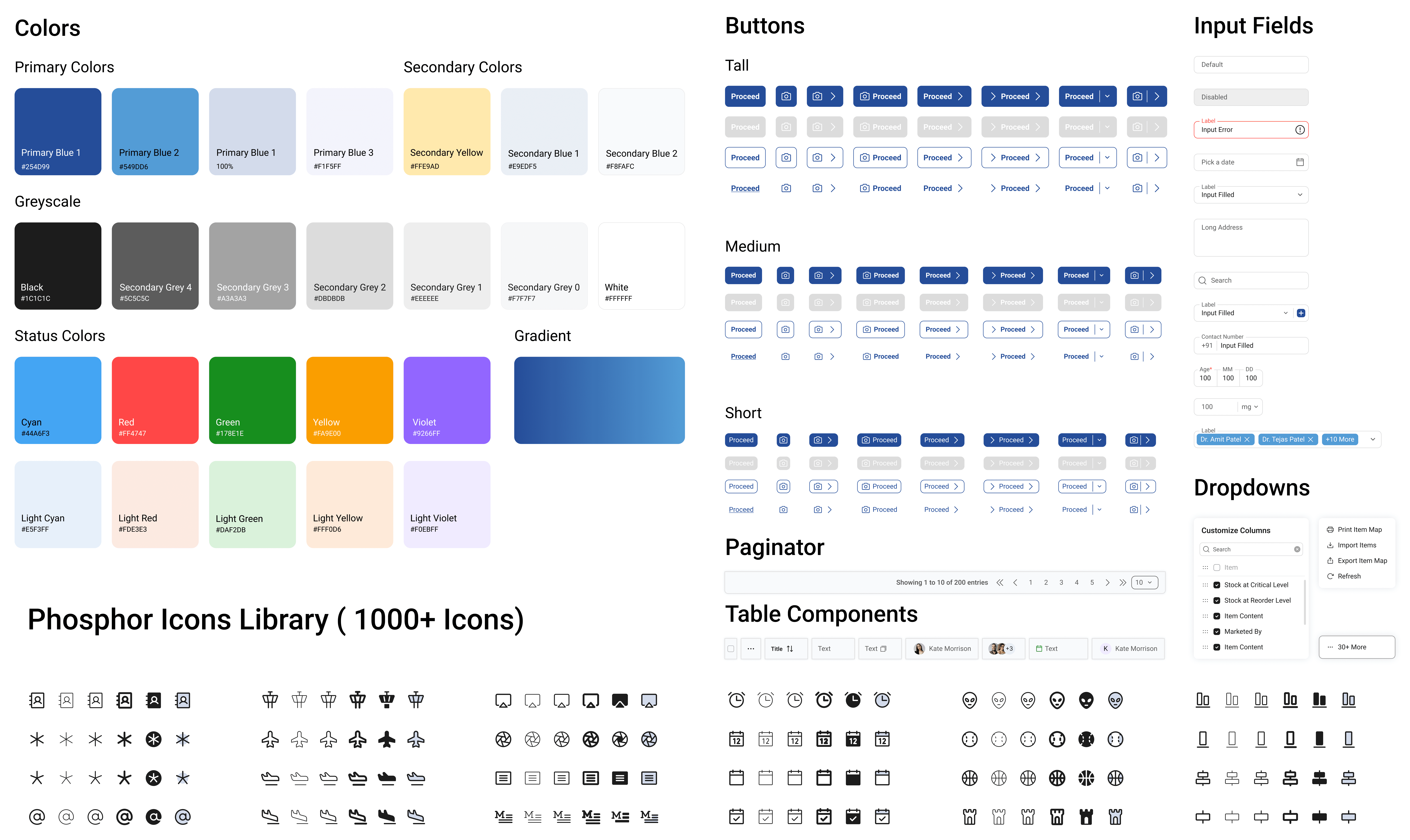
Modules
Modules
Solving the complexity of Consultation Process
Solving the complexity of Consultation Process
Solving the complexity of Consultation Process
Smart Consultation
Smart Consultation
What we solved?
What we solved?
Doctors have only 2–3 minutes per patient, yet current consultation systems don’t align with real clinical workflows and it leads to delays, cognitive overload, and pushing clinicians back to paper. Manual data entry, poor usability, and fragmented workflows further slow down OPDs where every second matters.
Doctors have only 2–3 minutes per patient, yet current consultation systems don’t align with real clinical workflows and it leads to delays, cognitive overload, and pushing clinicians back to paper. Manual data entry, poor usability, and fragmented workflows further slow down OPDs where every second matters.
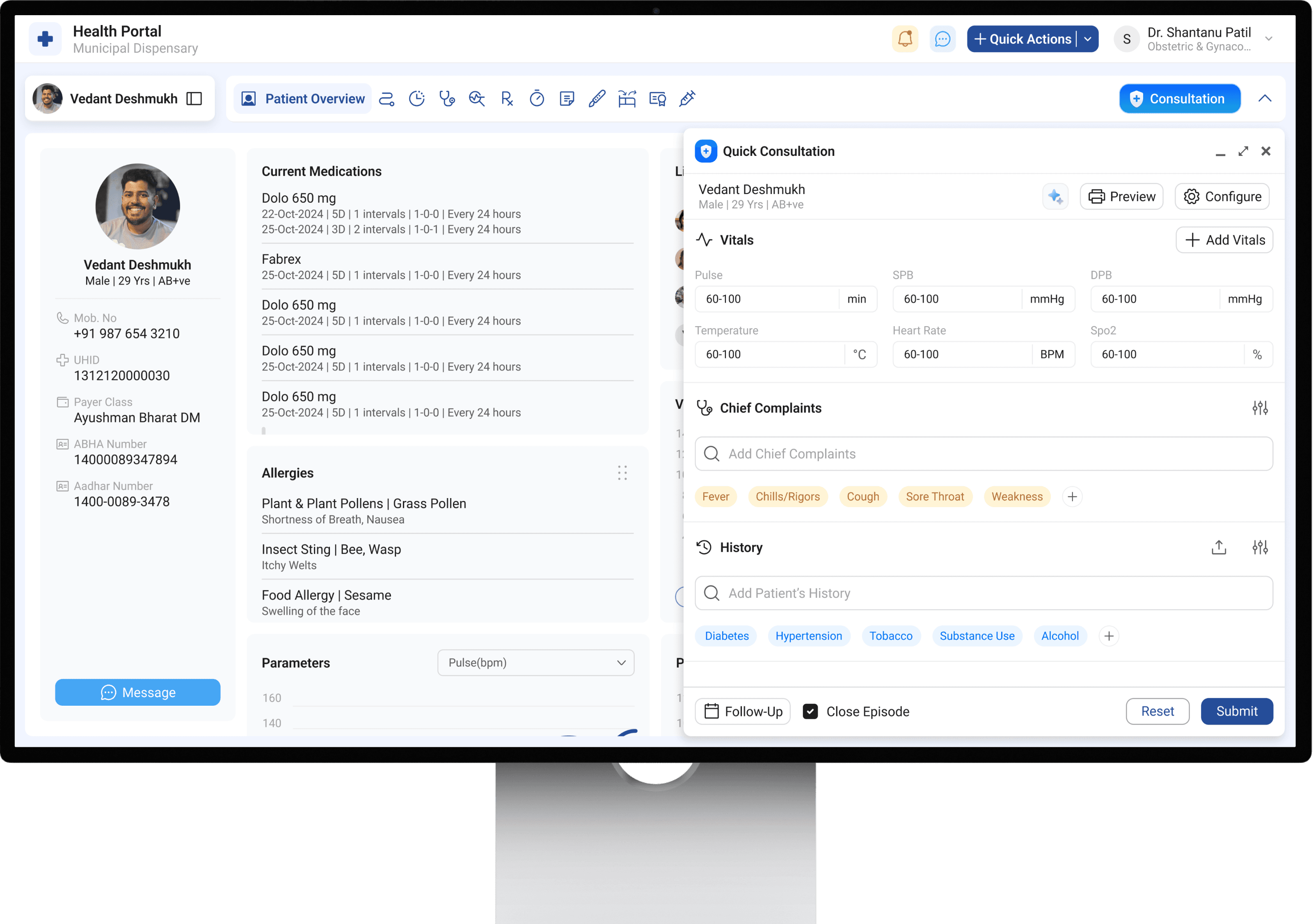
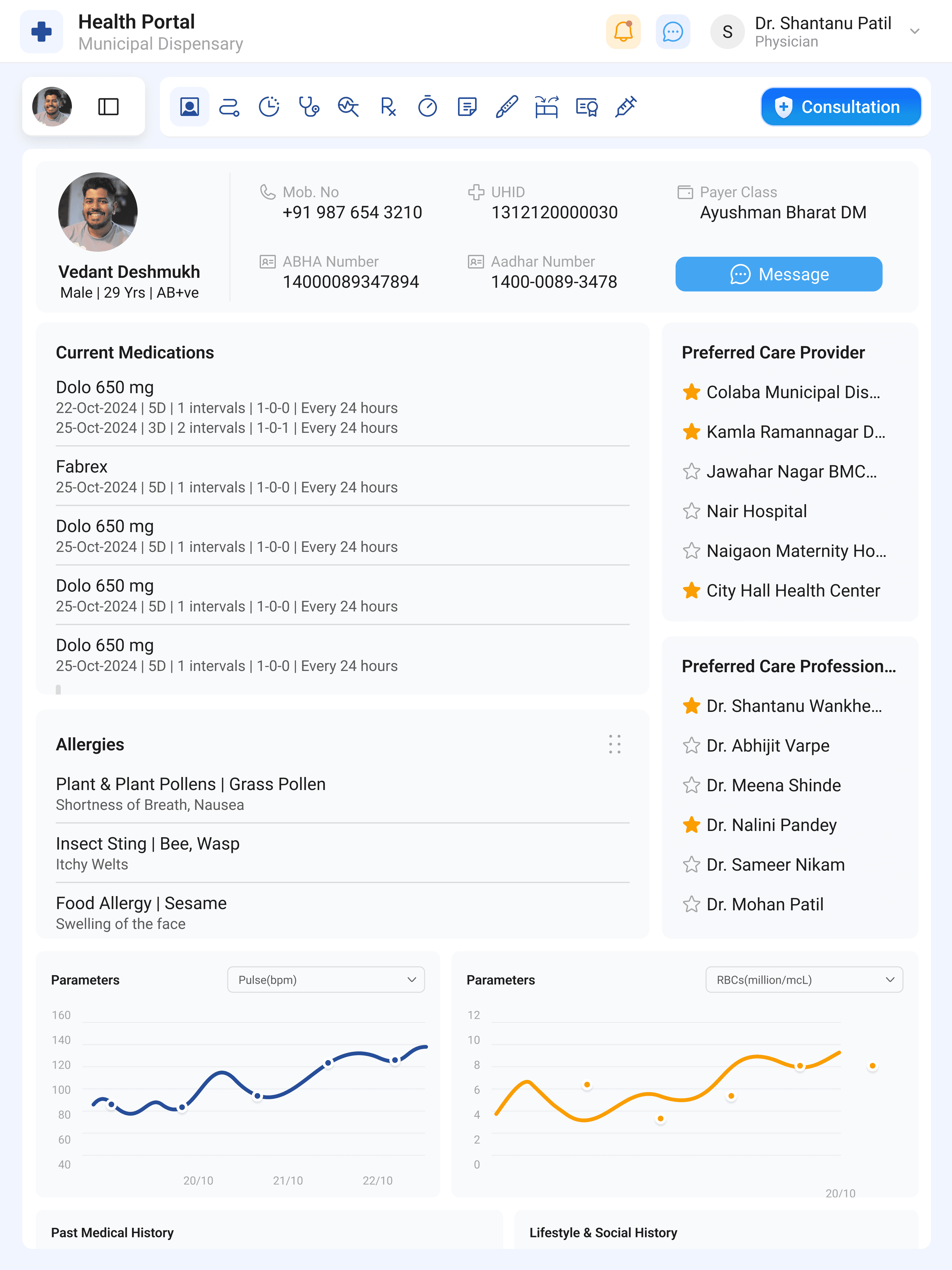
Patient Profile
Patient Profile
Patient Profile
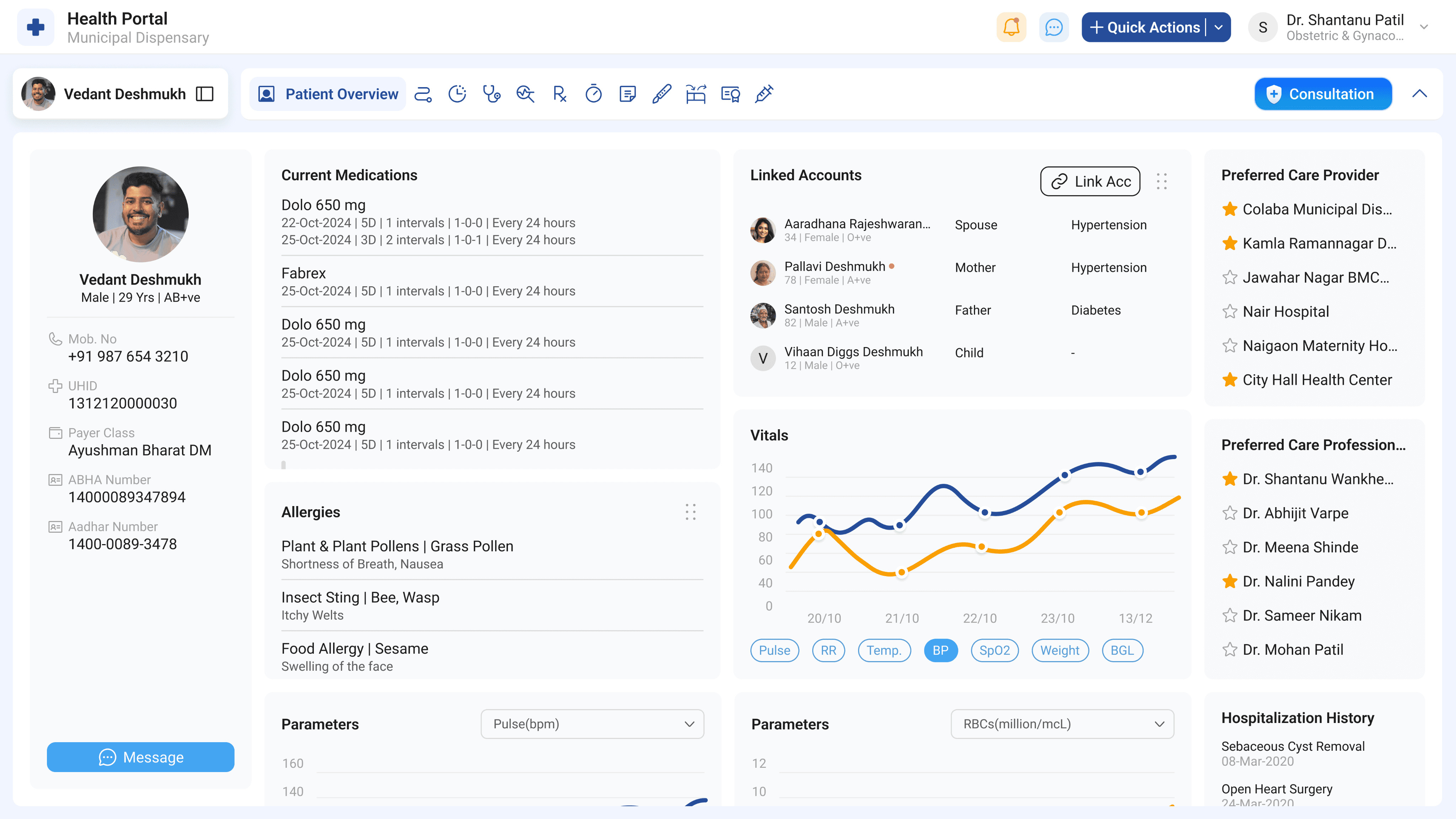
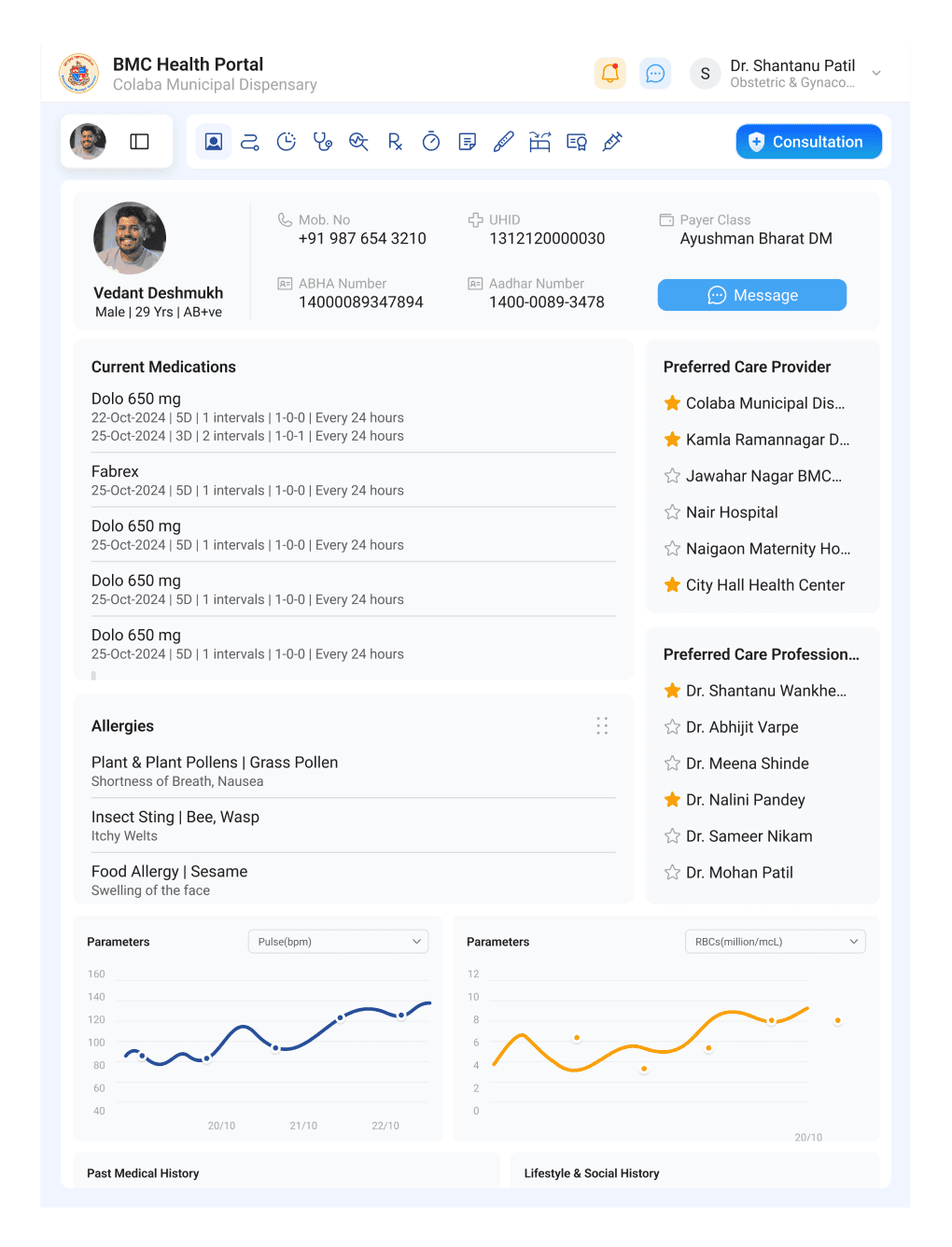
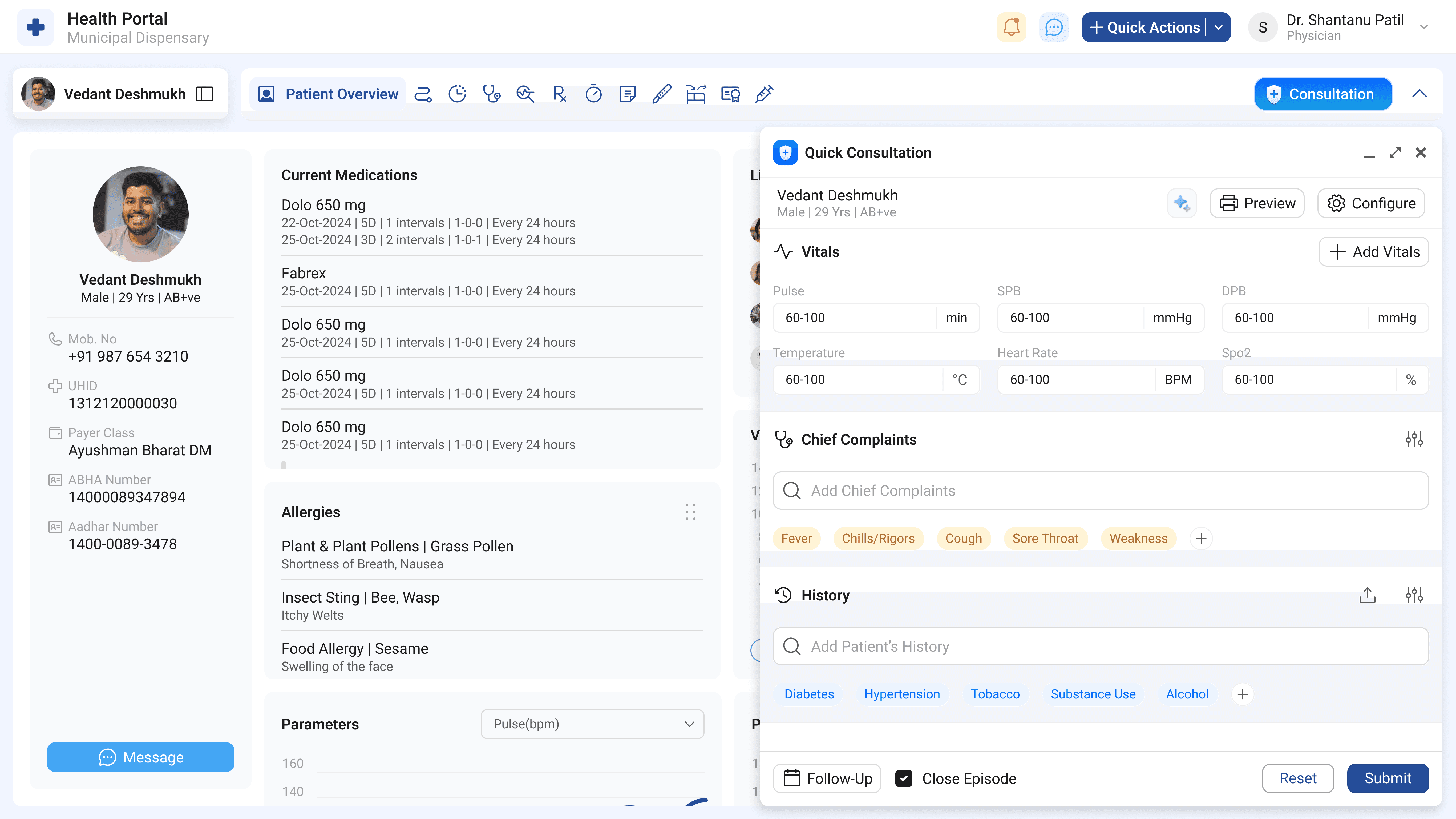
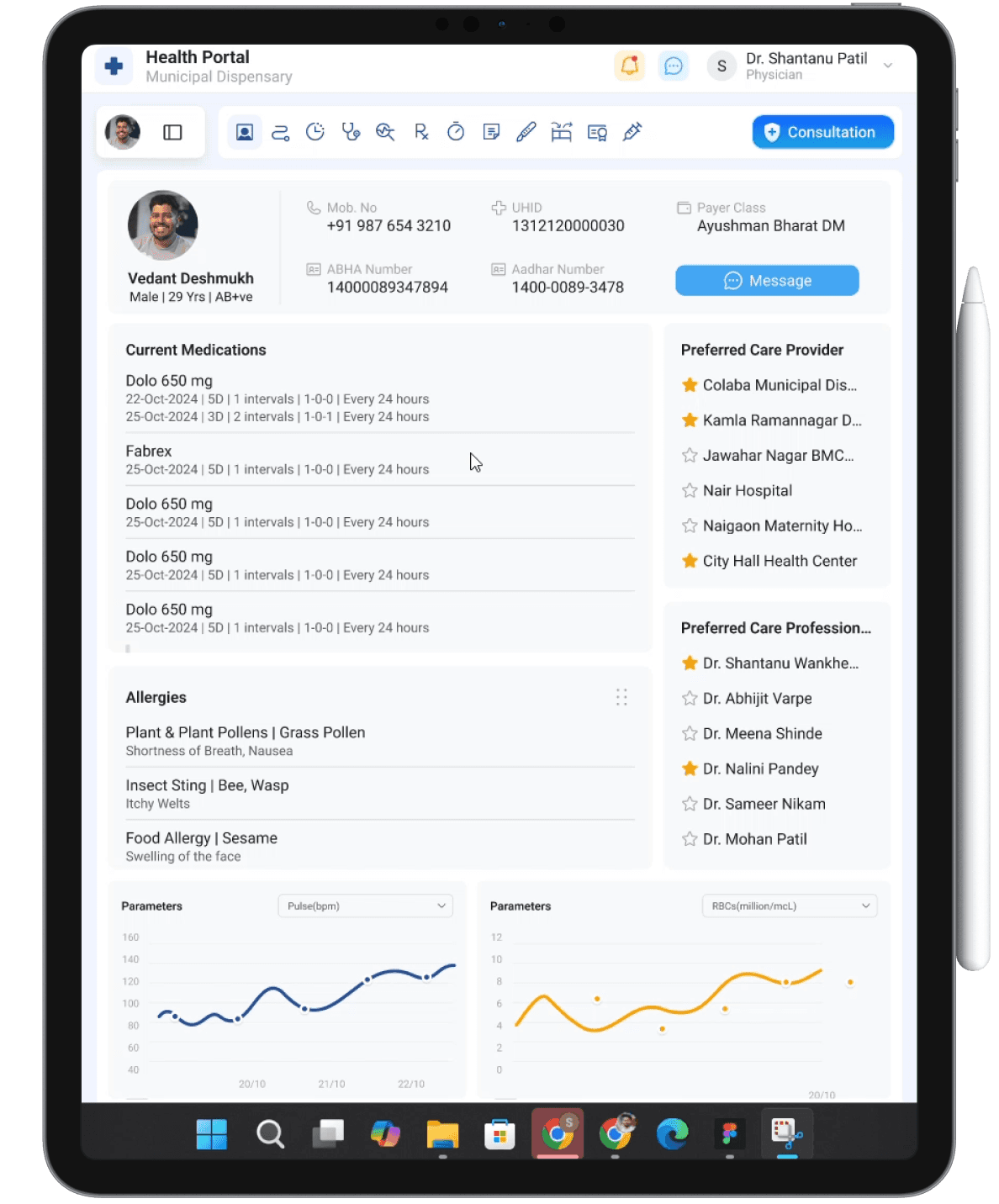
A quick, smart snapshot of the patient like history, medications, allergies, and past conditions, so doctors start consultations fully informed.
A quick, smart snapshot of the patient like history, medications, allergies, and past conditions, so doctors start consultations fully informed.
A quick, smart snapshot of the patient like history, medications, allergies, and past conditions, so doctors start consultations fully informed.
AI Consultation
AI Consultation
AI Consultation
AI listens, summarizes doctor–patient conversation in real time, turning minutes of typing into seconds of automated documentation.
AI listens, summarizes doctor–patient conversation in real time, turning minutes of typing into seconds of automated documentation.
AI listens, summarizes doctor–patient conversation in real time, turning minutes of typing into seconds of automated documentation.
Consultation Pad Configuration
Consultation Pad Configuration
Consultation Pad Configuration
Doctors can personalize their consultation pad by rearranging fields, adding shortcuts, and tailoring workflows to match their specialty and rhythm.
Doctors can personalize their consultation pad by rearranging fields, adding shortcuts, and tailoring workflows to match their specialty and rhythm.
Doctors can personalize their consultation pad by rearranging fields, adding shortcuts, and tailoring workflows to match their specialty and rhythm.
IoT Vitals collection
IoT Vitals collection
IoT Vitals collection
divided all consultation process in 7 main categories so doctor dont have to fill to many data
divided all consultation process in 7 main categories so doctor dont have to fill to many data
divided all consultation process in 7 main categories so doctor dont have to fill to many data
Task Categorization
Task Categorization
Task Categorization
7 smart categories streamline the consultation, cutting extra steps so doctors can work efficiently within their 2–3 minute OPD limit.
7 smart categories streamline the consultation, cutting extra steps so doctors can work efficiently within their 2–3 minute OPD limit.
7 smart categories streamline the consultation, cutting extra steps so doctors can work efficiently within their 2–3 minute OPD limit.
device-agnostic & user-friendliness
device-agnostic & user-friendliness
device-agnostic & user-friendliness
Scribe-to-Text and Swipe-to-Scribe to mimic natural handwriting workflows, ensuring seamless transition from case paper to digital records.
Scribe-to-Text and Swipe-to-Scribe to mimic natural handwriting workflows, ensuring seamless transition from case paper to digital records.
Scribe-to-Text and Swipe-to-Scribe to mimic natural handwriting workflows, ensuring seamless transition from case paper to digital records.
Action Chips
Action Chips
Action Chips
Smart Quick Action Chips let doctors add medications, investigations, or diagnoses with a single tap, cutting documentation time by nearly half.
Smart Quick Action Chips let doctors add medications, investigations, or diagnoses with a single tap, cutting documentation time by nearly half.
Smart Quick Action Chips let doctors add medications, investigations, or diagnoses with a single tap, cutting documentation time by nearly half.
See Iterations
See Prototype
Each consultation typically involves seven common tasks
Each consultation typically involves seven common tasks
Each consultation typically involves seven common tasks
Chief Complaints
Chief Complaints
History
History
Investigation
Investigation

Medication
Medication


Diagnosis
Diagnosis
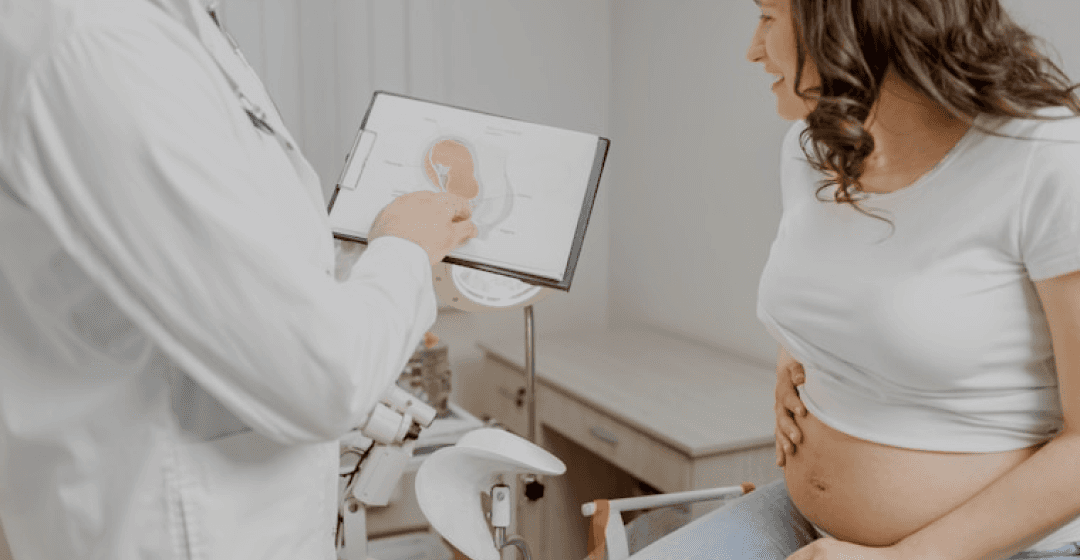
Advice
Advice

Referral
Referral
Smart Action Chips
Smart Action Chips
Smart Action Chips
Action Chips act as smart templates instantly auto-filling investigations, provisional diagnoses, medications, and advice based on the doctor’s selection. Instead of typing repeatedly, doctors simply review, tweak if needed, and finish the consultation in under
1–2 minutes.
Action Chips act as smart templates instantly auto-filling investigations, provisional diagnoses, medications, and advice based on the doctor’s selection. Instead of typing repeatedly, doctors simply review, tweak if needed, and finish the consultation in under
1–2 minutes.
User can add or modify these chips at any time since they function as the master.
User can add or modify these chips at any time since they function as the master.
Chief Complaints
Chief Complaint
Fever
Cough
Duration
Since
day
Since
year
Clinical Indicators
Temperature
°F
Severity
Add Chief Complaints
Chills/Rigors
Sore Throat
Weakness
Medication
Medicine Name
Tab
Ciplox TZ
Cap
Duloxetine
Frequency
1
0
0
1
1
0
0
1
Dosage Info
Dosage Info
Dosage Info
Duration
90
10
Add Medication
Dolo Master
In Progress
In Progress
In Progress
In Progress
History
History
Diabetes
Tobacco
Type
History Type
History Type
Onset
Since
Frequency
Add Patient’s History
Hypertension
Substance Use
Alcohol

Diagnosis
Diagnosis
Dengue
Malaria
Duration
Since
Since
Diagnosis Type
Diagnosis Type
Diagnosis Type
Add Diagnosis
Viral Infection
Malaria
Typhoid
Jaundice
Chief Complaints
Chief Complaint
Fever
Cough
Duration
Since
day
Since
year
Clinical Indicators
Temperature
°F
Severity
Add Chief Complaints
Chills/Rigors
Sore Throat
Weakness
Medication
Medicine Name
Tab
Ciplox TZ
Cap
Duloxetine
Frequency
1
0
0
1
1
0
0
1
Dosage Info
Dosage Info
Dosage Info
Duration
90
10
Add Medication
Dolo Master
In Progress
In Progress
In Progress
In Progress
History
History
Diabetes
Tobacco
Type
History Type
History Type
Onset
Since
Frequency
Add Patient’s History
Hypertension
Substance Use
Alcohol
Diagnosis
Diagnosis
Dengue
Malaria
Duration
Since
Since
Diagnosis Type
Diagnosis Type
Diagnosis Type
Add Diagnosis
Viral Infection
Malaria
Typhoid
Jaundice
Chief Complaints
Chief Complaint
Fever
Cough
Duration
Since
day
Since
year
Clinical Indicators
Temperature
°F
Severity
Add Chief Complaints
Chills/Rigors
Sore Throat
Weakness
Medication
Medicine Name
Tab
Ciplox TZ
Cap
Duloxetine
Frequency
1
0
0
1
1
0
0
1
Dosage Info
Dosage Info
Dosage Info
Duration
90
10
Add Medication
Dolo Master
In Progress
In Progress
In Progress
In Progress
History
History
Diabetes
Tobacco
Type
History Type
History Type
Onset
Since
Frequency
Add Patient’s History
Hypertension
Substance Use
Alcohol
Diagnosis
Diagnosis
Dengue
Malaria
Duration
Since
Since
Diagnosis Type
Diagnosis Type
Diagnosis Type
Add Diagnosis
Viral Infection
Malaria
Typhoid
Jaundice
Chief Complaints
Chief Complaints
Stomach A
Stomach A
Frequently
Frequently
Stomach ache
Stomach ache
Abdominal pain
Abdominal pain
Upper abdominal pain
Upper abdominal pain
Lower abdominal pain
Lower abdominal pain
Epigastric pain
Epigastric pain
Bloating
Bloating
Recurring
Recurring
Gas and flatulence
Gas and flatulence
Indigestion (Dyspepsia)
Indigestion (Dyspepsia)
Acid reflux / Heartburn
Acid reflux / Heartburn
Nausea
Nausea
Vomiting
Vomiting
Loss of appetite
Loss of appetite
Dropdown with Recurring & Frequently used options
Dropdown with Recurring & Frequently used options
Dropdown with Recurring & Frequently used options
60–70% of OPD cases being seasonal and recurring, doctors get instant access to ready-made templates for common conditions, making consultations faster, consistent, and more accurate.
60–70% of OPD cases being seasonal and recurring, doctors get instant access to ready-made templates for common conditions, making consultations faster, consistent, and more accurate.
Drug Interactions Alert
Drug Interactions Alert
Drug Interactions Alert
Provides quick access to frequently diagnosed conditions, enabling faster and more accurate consultations.
Provides quick access to frequently diagnosed conditions, enabling faster and more accurate consultations.
Drug Interaction Alert
Drug Interaction Alert
Contraindication: Combination may Increase Tizanidine Levels with serious CV&CNS Effects
Contraindication: Combination may Increase Tizanidine Levels with serious CV&CNS Effects
Current Medication
Current Medication
TAB
TAB
Ciplox TZ
Ciplox TZ
Ciprofloxacin and Tinidazole
Ciprofloxacin and Tinidazole
New Medication
New Medication
CAP
CAP
Duloxetine
Duloxetine
Duloxetine hydrochloride
Duloxetine hydrochloride
Cancel
Cancel
Continue
Continue
Instant IoT-Powered Vitals
Instant IoT-Powered Vitals
Instant IoT-Powered Vitals
By connecting ECGs, glucometers, pulse oximeters, and BP monitors directly to the consultation pad, doctors get real-time, error-free vitals automatically. No typing, no delays, just accurate data captured the moment a device records it.
By connecting ECGs, glucometers, pulse oximeters, and BP monitors directly to the consultation pad, doctors get real-time, error-free vitals automatically. No typing, no delays, just accurate data captured the moment a device records it.
-30%
-30%
Reduction in Documentation time
Reduction in Documentation time
Swipe-to-Scribe: Instant Notes, Just Like Paper
Swipe-to-Scribe: Instant Notes, Just Like Paper
Swipe-to-Scribe: Instant Notes, Just Like Paper
The Scribe Pad mirrors real case papers, letting doctors jot notes naturally on a tablet keeping their write-first mental model. Instantly converts handwriting into structured digital records, reducing cognitive load and making digital adoption effortless.
Visual Medical Aids
Visual Medical Aids
Visual Medical Aids
Doctors can pull in pre-loaded anatomical diagrams during consultations to visually communicate conditions and treatments, improving patient clarity, trust, and overall experience.
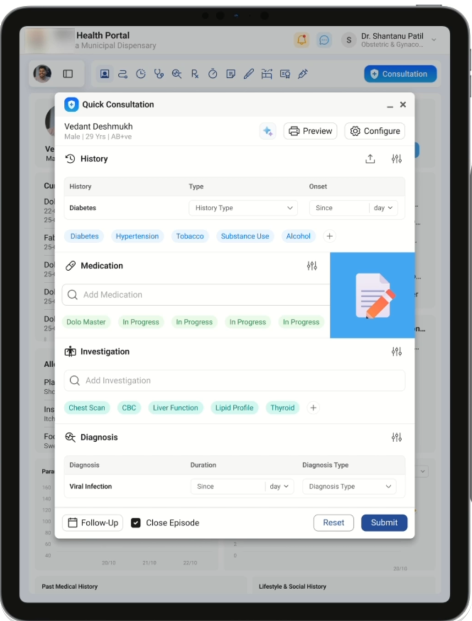
AI Powered Speech-to-Text Documentation
AI Powered Speech-to-Text Documentation
AI Powered Speech-to-Text Documentation
Doctors-Patient speak freely while AI captures and structures the entire consultation in real time, saving time, reducing manual effort, and ensuring no critical detail is missed.
Doctors-Patient speak freely while AI captures and structures the entire consultation in real time, saving time, reducing manual effort, and ensuring no critical detail is missed.
Ensuring Safe, Standardized & Faster Drug Testing
Ensuring Safe, Standardized & Faster Drug Testing
Ensuring Safe, Standardized & Faster Drug Testing
Central Analytical Lab Module
Central Analytical Lab Module
What we solved?
What we solved?
Drug testing in public laboratories relies heavily on outdated paper protocols, manual data entry, and disconnected workflows. This leads to delays, inconsistent reporting, difficulty tracking sample status, and limited administrative visibility, ultimately slowing down the release of critical drug quality reports.
Drug testing in public laboratories relies heavily on outdated paper protocols, manual data entry, and disconnected workflows. This leads to delays, inconsistent reporting, difficulty tracking sample status, and limited administrative visibility, ultimately slowing down the release of critical drug quality reports.
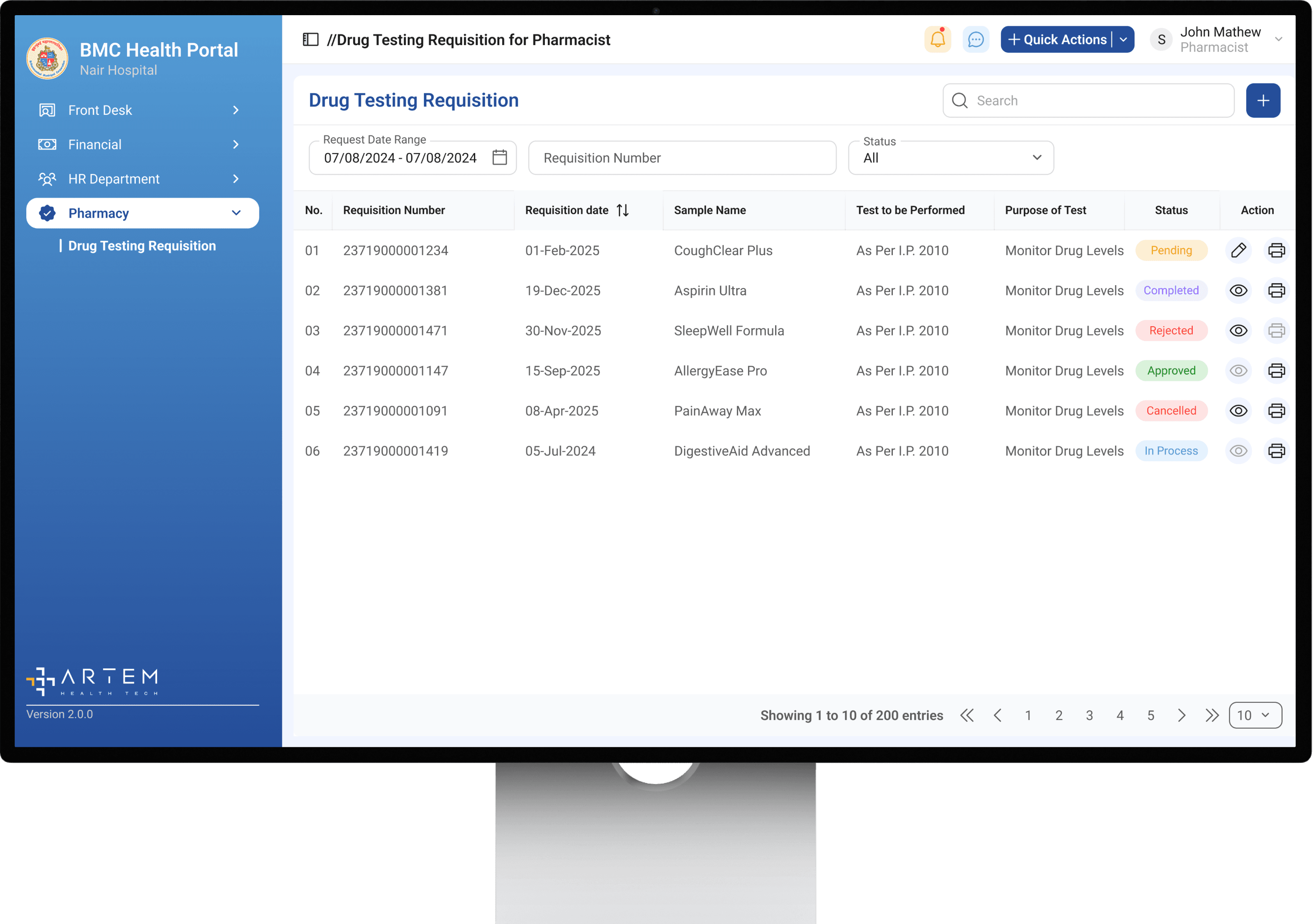
Menu Bar
Menu Bar
Menu Bar
This bar allows navigation through all modules and tasks (Currently, it serves as the pharmacist’s menu for creating drug test requests).
This bar allows navigation through all modules and tasks (Currently, it serves as the pharmacist’s menu for creating drug test requests).
This bar allows navigation through all modules and tasks (Currently, it serves as the pharmacist’s menu for creating drug test requests).
Filter and Search Option
Filter and Search Option
Filter and Search Option
User can search the request also can filter according to the status of the request.
User can search the request also can filter according to the status of the request.
User can search the request also can filter according to the status of the request.
New Request
New Request
New Request
First action step of this module where a pharmacist/user creates a new drug test requisition.
First action step of this module where a pharmacist/user creates a new drug test requisition.
First action step of this module where a pharmacist/user creates a new drug test requisition.
Action Buttons
Action Buttons
Action Buttons
Requests can be
Edited
Canceled
Printed
View
in a simple way.
Requests can be
Edited
Canceled
Printed
View
in a simple way.
Requests can be
Edited
Canceled
Printed
View
in a simple way.
Requisition List table
Requisition List table
Requisition List table
A structured, scrollable table that consolidates all drug and test details in one view for precise tracking and cleaner record management.
A structured, scrollable table that consolidates all drug and test details in one view for precise tracking and cleaner record management.
A structured, scrollable table that consolidates all drug and test details in one view for precise tracking and cleaner record management.
Status Chips
Status Chips
Status Chips
Real-time updates of each request that has been made will shown here in status chips.
Real-time updates of each request that has been made will shown here in status chips.
Real-time updates of each request that has been made will shown here in status chips.
See Prototype
Role-Based Workflow
Role-Based Workflow
Role-Based Workflow
Five tailored logins (Pharmacist, Assistant Drug Analyzer, Analyst, Senior Analyst, Assistant Dean) streamline responsibilities and prevent workflow overlaps.
Five tailored logins (Pharmacist, Assistant Drug Analyzer, Analyst, Senior Analyst, Assistant Dean) streamline responsibilities and prevent workflow overlaps.
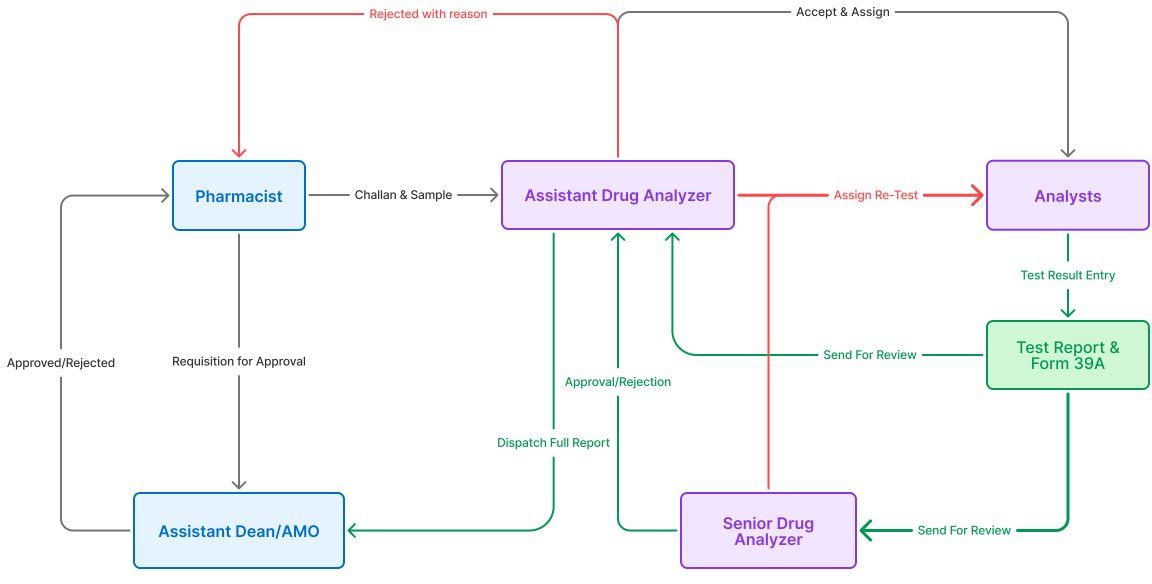
Smart and Real-time Status Tracking
Smart and Real-time Status Tracking
Smart and Real-time Status Tracking
Real-time status updates for every test stage (assigned, in-progress, review, approved, dispatched) ensure complete transparency and eliminate guesswork.
Real-time status updates for every test stage (assigned, in-progress, review, approved, dispatched) ensure complete transparency and eliminate guesswork.
One-Click Report Dispatch
One-Click Report Dispatch
One-Click Report Dispatch
Completed drug test reports (including Form 39A) can be sent to the requesting facility instantly through the interconnected HMIS.
Completed drug test reports (including Form 39A) can be sent to the requesting facility instantly through the interconnected HMIS.
Status
Status
Pending
Pending
Completed
Completed
Rejected
Rejected
Approved
Approved
Cancelled
Cancelled
In Process
In Process
Action
Action
Pharmacist Login
Pharmacist Login
Status
Status
Assigned
Assigned
In-Progress
In-Progress
Sent for Review
Sent for Review
Approved
Approved
Approved
Approved
Re-test
Re-test
Action
Action
Analyst Login
Analyst Login
Status
Status
Pending
Pending
Pending
Pending
Accepted
Accepted
Assigned
Assigned
Rejected
Rejected
Tested
Tested
Completed
Completed
Re-test
Re-test
Action
Action
Sr. Drug Analyzer Login
Sr. Drug Analyzer Login
I.P. 2022 Standardized Protocols
I.P. 2022 Standardized Protocols
I.P. 2022 Standardized Protocols
Digitalized and auto-filled forms aligned with Indian Pharmacopoeia 2022, replacing outdated 1996 paper formats to ensure accuracy, compliance, and safety.
Digitalized and auto-filled forms aligned with Indian Pharmacopoeia 2022, replacing outdated 1996 paper formats to ensure accuracy, compliance, and safety.
Flexible Test Entry
Flexible Test Entry
Flexible Test Entry
Seven modern protocols, including a free-text protocol that allow analysts to handle diverse drug types and fill forms in parts with draft-saving options.
Seven modern protocols, including a free-text protocol that allow analysts to handle diverse drug types and fill forms in parts with draft-saving options.
Specialty Modules, Designed for Precision and Speed
Specialty Modules, Designed for Precision and Speed
Specialty Modules, Designed for Precision and Speed
Audiology and Speech Therapy
Audiology and Speech Therapy
What we solved?
What we solved?
Specialty departments like Audiology, Speech Therapy, and Psychiatry rely heavily on detailed, paper-based forms, manual interpretation, and fragmented documentation. This leads to inconsistent assessments, slow reporting, high cognitive load, and difficulty in tracking patient progress.
Specialty departments like Audiology, Speech Therapy, and Psychiatry rely heavily on detailed, paper-based forms, manual interpretation, and fragmented documentation. This leads to inconsistent assessments, slow reporting, high cognitive load, and difficulty in tracking patient progress.
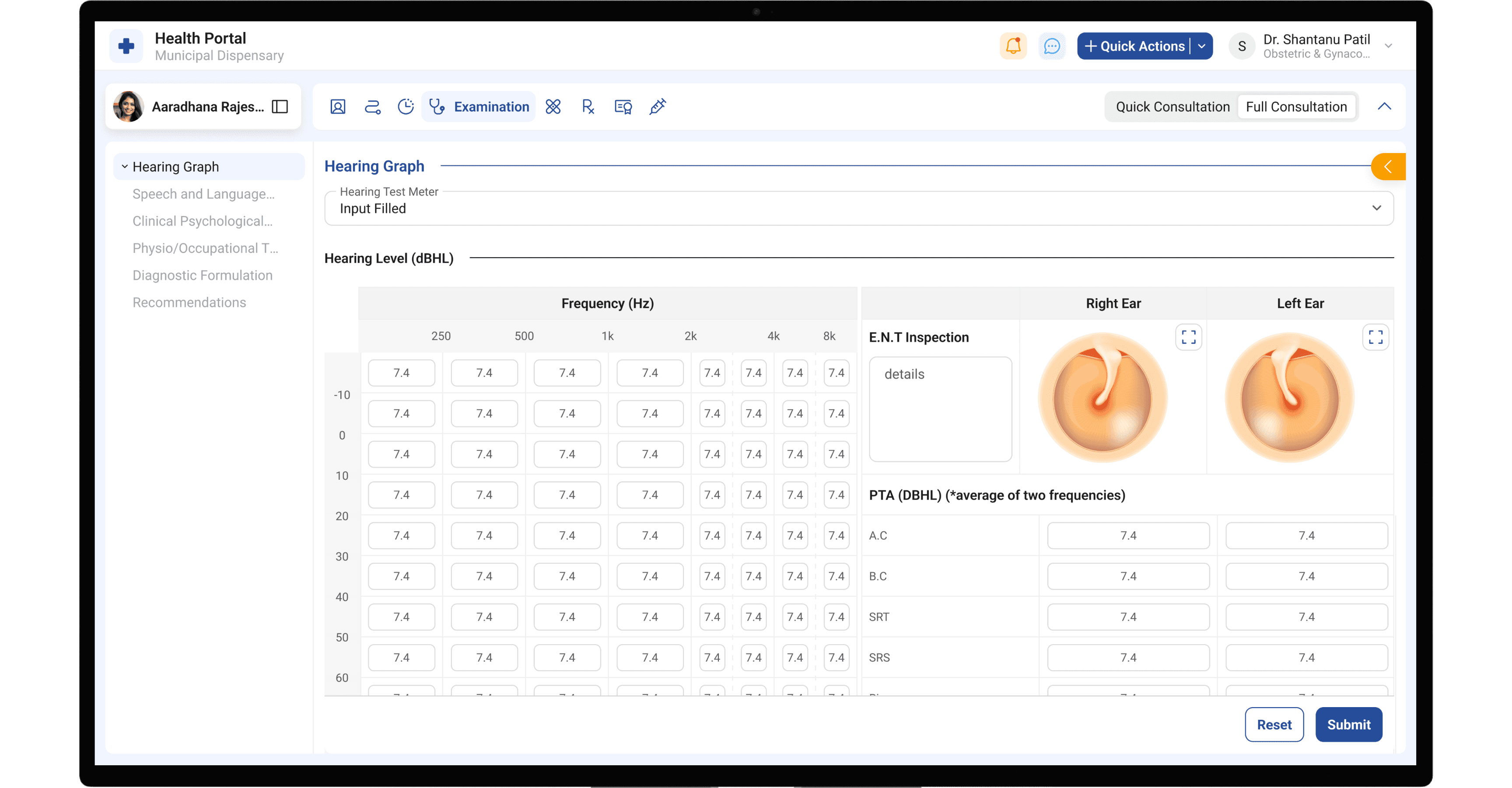
Interactive Hearing Graphs
Interactive Hearing Graphs
BERA and hearing assessment forms with real-time, editable hearing graphs, allowing audiologists to plot thresholds, annotate findings, and generate structured reports instantly.
BERA and hearing assessment forms with real-time, editable hearing graphs, allowing audiologists to plot thresholds, annotate findings, and generate structured reports instantly.
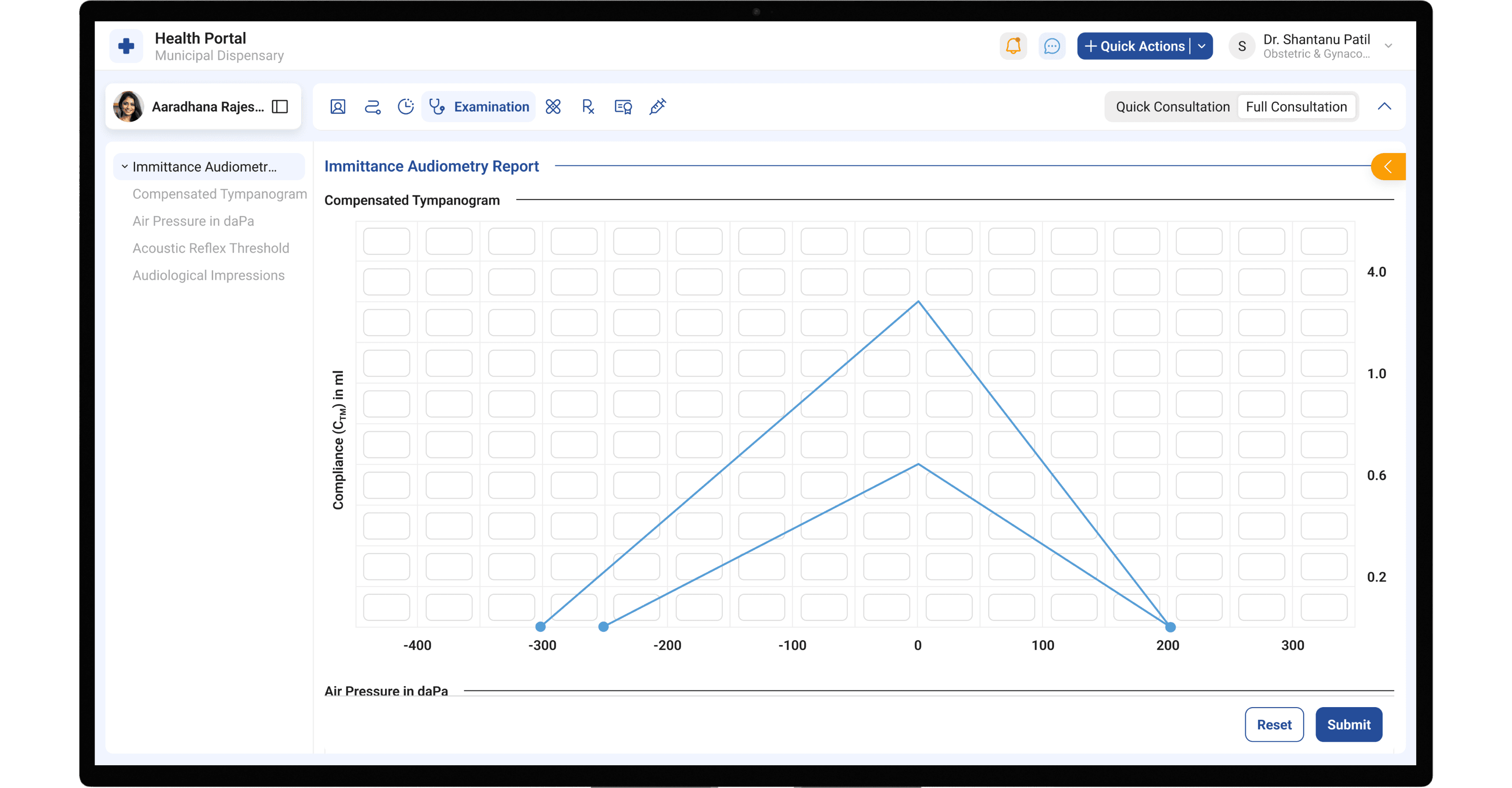
Smart Immittance Audiometry Report
Smart Immittance Audiometry Report
Automated tympanometry and reflex reporting with intuitive visual layouts to reduce interpretation time and enhance diagnostic clarity.
Automated tympanometry and reflex reporting with intuitive visual layouts to reduce interpretation time and enhance diagnostic clarity.
Specialty Modules, Designed for Precision and Speed
Specialty Modules, Designed for Precision and Speed
Specialty Modules, Designed for Precision and Speed
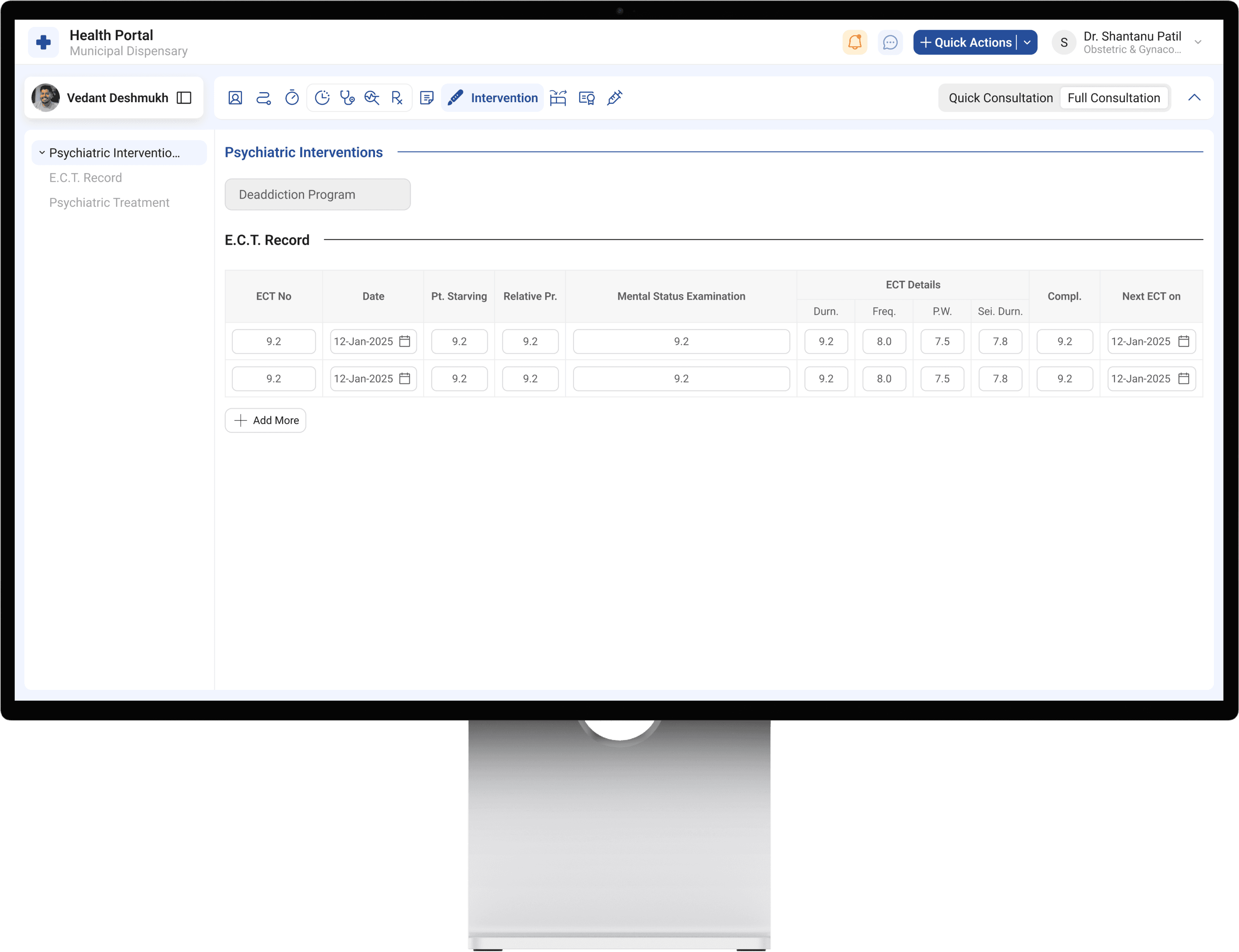
Psychiatry
Psychiatry
What we solved?
What we solved?
Specialty departments like Audiology, Speech Therapy, and Psychiatry rely heavily on detailed, paper-based forms, manual interpretation, and fragmented documentation. This leads to inconsistent assessments, slow reporting, high cognitive load, and difficulty in tracking patient progress.
Specialty departments like Audiology, Speech Therapy, and Psychiatry rely heavily on detailed, paper-based forms, manual interpretation, and fragmented documentation. This leads to inconsistent assessments, slow reporting, high cognitive load, and difficulty in tracking patient progress.
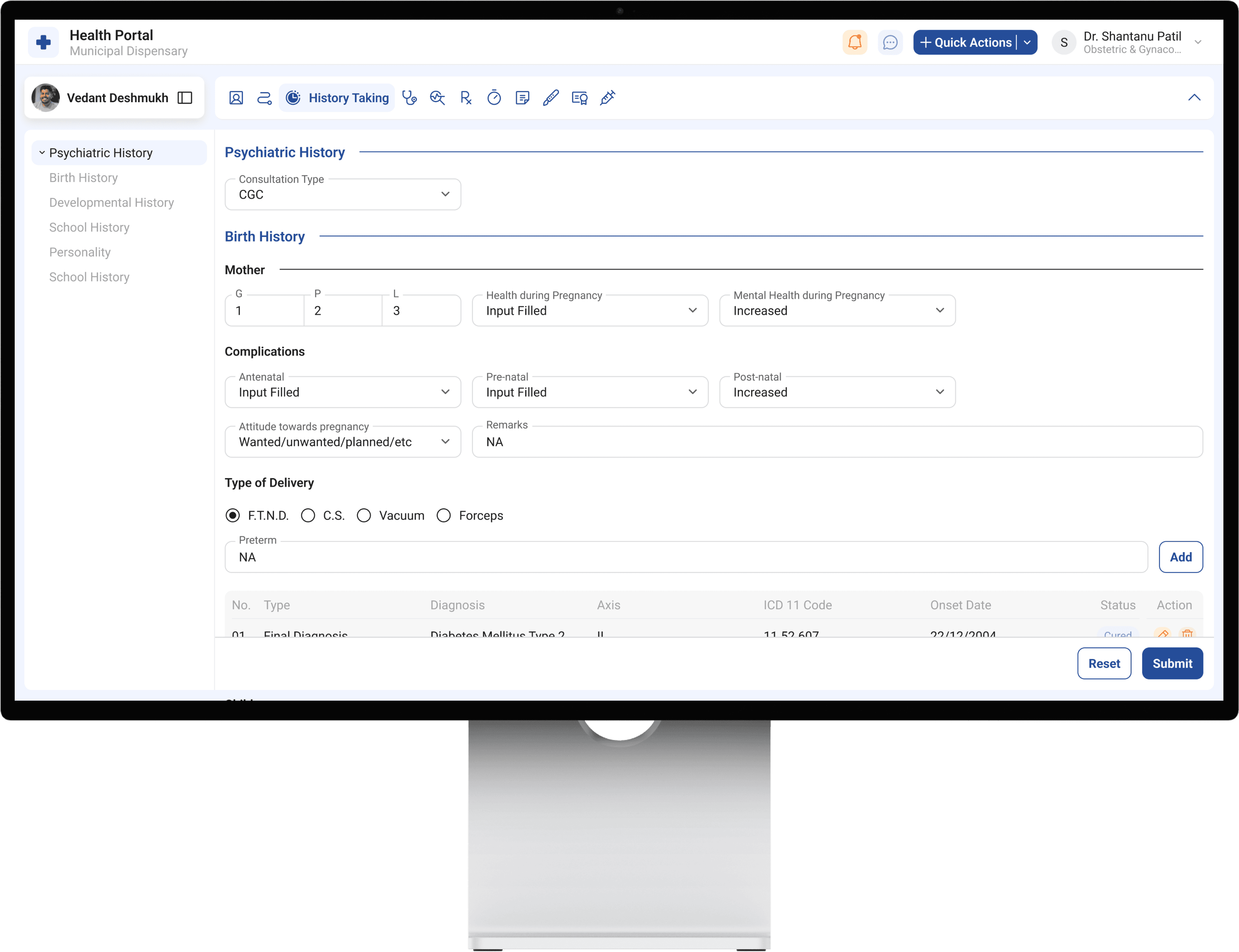
Digital Psychiatry Consultation
Digital Psychiatry Consultation
Digital Psychiatry Consultation
Three specialized forms- Child Guidance Clinic, Drug De-addiction, and General Psychiatry OPD, designed to reduce clicks, guide clinical reasoning, and adapt to diverse psychiatric workflows.
Three specialized forms- Child Guidance Clinic, Drug De-addiction, and General Psychiatry OPD, designed to reduce clicks, guide clinical reasoning, and adapt to diverse psychiatric workflows.
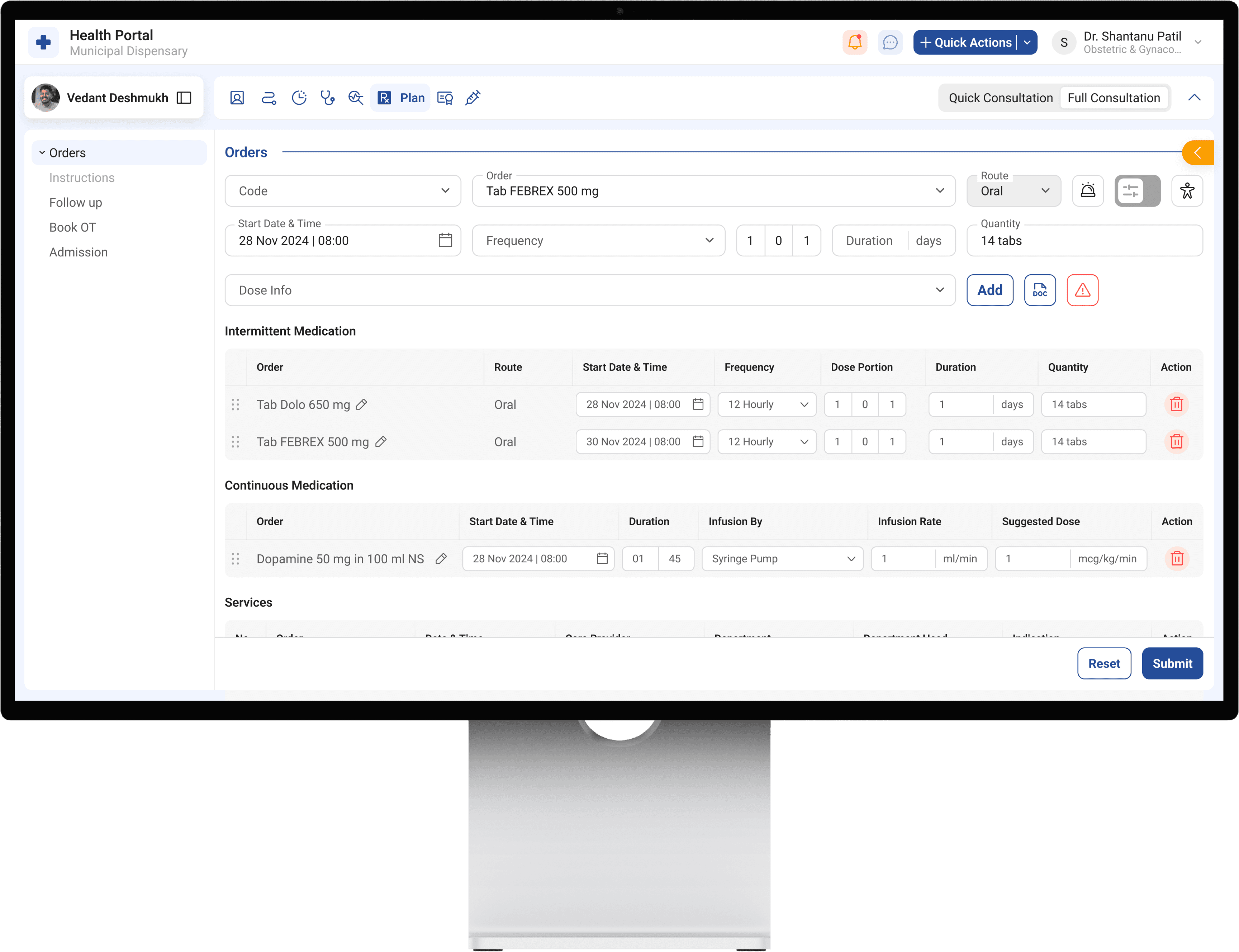
Structured Clinical Pathways
Structured Clinical Pathways
Structured Clinical Pathways
Predefined fields, grouped histories, and smart input controls ensure assessments remain comprehensive yet quick, even in high-volume OPDs.
Predefined fields, grouped histories, and smart input controls ensure assessments remain comprehensive yet quick, even in high-volume OPDs.
Outcomes
Outcomes
Learnings
Learnings
Cross-Functional teams Collaboration
Cross-Functional teams Collaboration
Presenting Concept to Management and Technical Heads
Presenting Concept to Management and Technical Heads
Impact of Detailed Prototyping and Usability Testing
Impact of Detailed Prototyping and Usability Testing
The Impact of User Research on Complex Projects
The Impact of User Research on Complex Projects
Working Within a Broader Ecosystem with multiple stakeholders
Working Within a Broader Ecosystem with multiple stakeholders
User Experience and HCI guidelines for Healthcare
User Experience and HCI guidelines for Healthcare
Reflections
Reflections
Technology can't fix broken systems without understanding people first
Technology can't fix broken systems without understanding people first
Real change starts with empathy, not disruption
Real change starts with empathy, not disruption
The future of HMIS is not a tool, but a service ecosystem
The future of HMIS is not a tool, but a service ecosystem
Upcoming Modules
Upcoming Modules
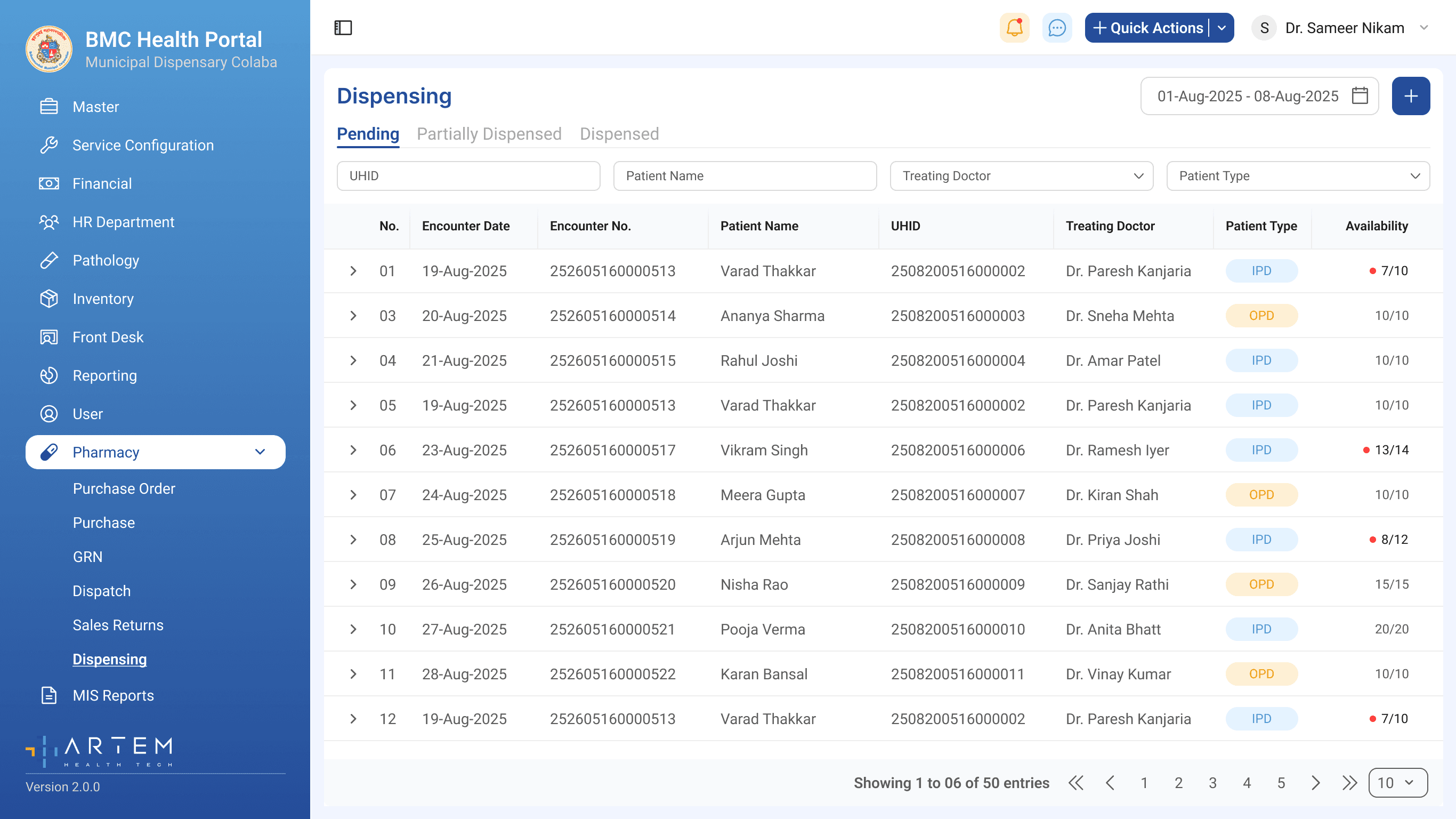
Coming Soon..
Managing chaos at the dispensing counter by reducing dispensing time and increasing the Dispensing module's usability by 30–40%
Managing chaos at the dispensing counter by reducing dispensing time and increasing the Dispensing module's usability by 30–40%
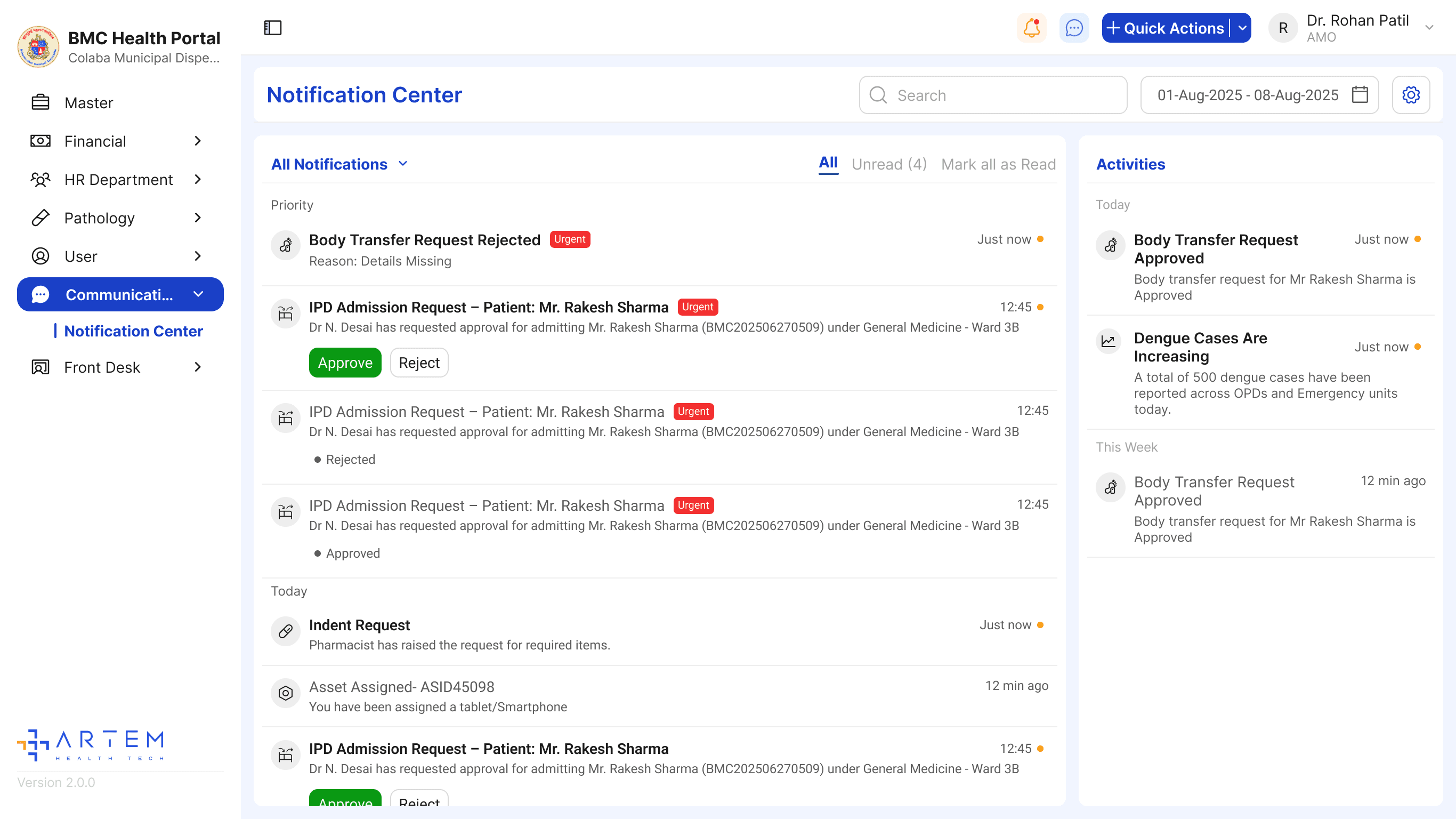
Coming Soon..
How we solved users' multitasking Issues and simplified their daily tasks to increase the Productivity by 20%.
How we solved users' multitasking Issues and simplified their daily tasks to increase the Productivity by 20%.